A Murky Mile (Four Nations of Beer Part 2)

20140614_124847

In a series of four features, I will be examining the beer culture in four countries through the lens of a particular event. This second part looks at the all-new craft beer institution that is the Bermondsey Beer Mile and just how varied and mature the London beer scene has become. Read Part 1, featuring the W-Ales Beer Festival, here.

The Bermondsey Beer Mile is so craft it hurts. Five microbreweries, ranging from the fresh-faced Anspach and Hobday to the more established like Brew By Numbers and Partizan to the already legendary like The Kernel, are dotted along a line (easily over a mile if we’re being pedantic, especially if you travel in an irregular fashion) in east London. I joke to people that in the future, archaeologists will incorrectly reason that railways were built to connect all the capital’s breweries. In Bermondsey, you would be forgiven for thinking just that.

No sooner had ‘The Mile’ become A Thing than people were complaining about how busy it was at every brewery. Beer geeks could be seen plotting innovative strategies of ‘tackling’ the Mile on Twitter, trying to outwit the hordes and be front of the line for a fresh 2/3rds at each brewery. The reality is that it is a bit difficult to do it in a straightforward way, but I think that for some people that’s part of the fun.

So what’s the appeal? Well, generally speaking, the Bermondsey Beer Mile offers some of the best beer in London, at relatively low cost (£3 for 2/3rds of a pint, unless otherwise indicated) and the opportunity to drink as fresh as is feasibly possible. When done in a mob group of fellow wankers seasoned beer enthusiasts, it can make for a wonderful day. Also, naturally, it gives one a rather profound insight into how ‘craft’ is doing in London right now, so on 14th June I made the journey to Bermondsey and did the mile with some excellent drinking partners.

In Brew By Numbers, where our Mile began, we have a brewery rapidly graduating into that ‘2011-2012 Kernel’ sort of phase, where almost everything they do is brand new and quite exemplary. I love the branding, but the actual numbering system is a bit annoying to me still (who asks for the number at the bar and not the beer ‘s name?). After an exhilaratingly crisp and juicy Motueka and Lime Saison, I ask for a Session IPA Mosaic and, like my fellow Milers, am simply blown away by it. The aroma is a spectacular bouquet of tropical fruits that comfortably makes the case for ‘fresh is best’. The beer’s palate is like an electric conduit of lime, orange and mango jacked right into your tongue, ripe with pith and bitterness. The vibe at BBNo is very laid-back, with a very simple layout of benches outside that encouraged a sociable drinking atmosphere. Given how great their beers are tasting at the moment, they may need to work out how accommodate far greater numbers of people.

20140614_124911

Meanwhile, at The Kernel, now closing early (at 2pm) due to its arch-busting popularity, we are greeted by nothing less than a fort of iconic brown paper-clad bottles. The last time I was inside The Kernel, it was a cave of pallets, bottles, boxes and just stuff. Now it seems sharper, more organised, not corporate but certainly a professional appearance honed by a growing legion of fans and regular custom. One cavernous arch is given over entirely to customers, seated or otherwise. Some fantastic beers were on draught, including the collaboration with Camden Town Brewery, Gentleman’s Agreement, a barrel-aged blend of Camden Gentleman’s Wit and Kernel London Sour. It’s a truly stunning beer, its apple-skin and sharply sour edges injected with lemon and grapefruit juiciness and rounded by tannic, oaky notes. It’s a technical marvel – enormously flavoursome and complex for a beer at 4.3% abv.

There is a very promising trend in blending and barrel-aging at the moment, something that really shows a maturation (no pun intended) of the British beer scene. Sure, we still love to throw hops at beers like there’s no tomorrow, but we’re also experimenting in esoteric methods and using real skill to – and I mean this as a verb – craft beer. I expect to see more of this in the next year, as the more accomplished new breweries each seek to up their game in this area.

After The Kernel came Partizan, which was tricky to find. It required traversing an active (and very noisy) building site and following an extremely ‘craft’ hand drawn cardboard sign. There were more cardboard signs inside, at the tiny bar in front of Partizan (formerly The Kernel’s) brewkit. The beers on offer included some delectable-looking saisons and IPAs. Another trend I’ve noticed of late is beers infused with different types of tea, and I’ve enjoyed pretty much every one I’ve had. The one on offer at Partizan, an Iced Tea Saison, was too tempting to resist, especially at its sensible strength of 3.9% abv. Unfortunately, it was just a bit too thin, with not enough tea flavour to justify its name. When I think of the best tea-infused beers I’ve had, they tended to be bigger bodied styles – IPAs and porters, so perhaps a different approach to the saison recipe is needed as well as using more tea. Still, it was further evidence that the more established breweries on the Mile are Thinking In New Ways. Partizan are great brewery and I’ve no doubt that, with their track record, they’ll master this style in no time.

20140614_141105


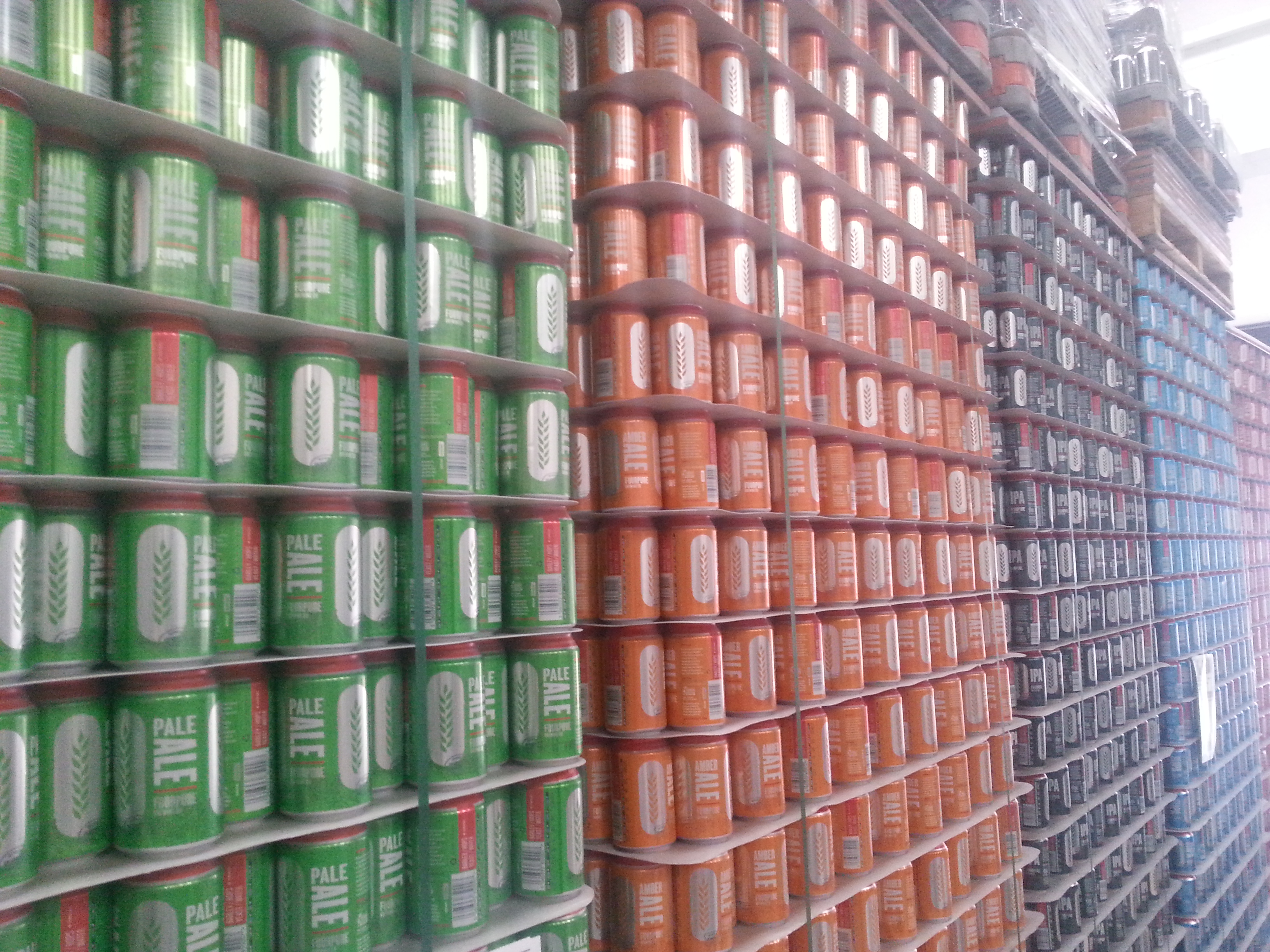
At the next stop, Fourpure, tucked away in an industrial estate at the other end of The Mile, we have a glimpse of the future, or at least an alternate version of the present. This is an example of The American Way: a shiny new brewery with towers of brightly-coloured cans, a brewery tap bar slinging schooners of the freshest draught beer and, naturally, a ping pong table next to the canning line. The friendly bubbling of beery conversation around long tables is occasionally punctuated by a ping pong ball bouncing off a piece of brewing equipment or a tower of hollow aluminium cans. Special mention must also be given to the pulled pork sausage rolls available at the bar, which were nothing short of majestic. It’s a warm and welcoming place, but then it has to be, given that it’s the furthest flung of the Bermondsey Mile breweries.

Here, many of us partook of another Session IPA, though Fourpure’s example was a subtler and smoother beast designed to be enjoyed by the six-pack. Still, it was refreshingly crisp and had some nicely nuanced depths to its hop character, though it’s certainly not the fireworks of the Session IPA Mosaic we had at Brew By Numbers earlier that day. There’s certainly a lot of ‘Session IPA’ going about in London now, which is a very American take on something we already do quite well – fresh, bright hoppy pale ales. I don’t have a problem with the name exactly, and it doesn’t matter what we, and I mean beer geeks, think of the name. Ultimately, if consumers as a whole find it useful, it will stick around, just like so many beer style names in the past.
20140614_143058

My Mile ended somewhat inauspiciously at the opposite end from Fourpure, in the arch shared by Bullfinch and Anspach & Hobday, a brewery of which I am rather fond. I hold A&H’s Smoked Brown, Table Porter and IPA in high regard, particularly for a such a new brewery. Whenever I have had their beers from the bottle or at a Craft Beer Co, they’ve been sublime. Their Smoked Tea Porter, a recent collaboration with Melissa Cole, hit all the right notes and was impressively balanced – one of the best tea-infused beers I’ve ever had. Unfortunately, this particular visit saw some fellow Milers given some below-average beers that seemed not entirely ready to serve, and there was one glass of The Pale which took London Murky to its extreme. The beer was everything that unfined beer critics would just love to be served: an opaque liquid the colour of a manilla envelope that couldn’t have finished fermenting. The beer was exchanged but not taken off sale. Concerns were raised with the brewers and were duly noted, but it was still a low point on which to end the Mile.

There’s a lot of spite and anger about unfined and unfiltered beer at the moment, much of it directed at new brewers, some of whom are even accused of deliberately ‘murky’-ing their beer to be ‘cool’. The fact is that many of these newer brewers simply do not have the technology to stop their beers being as hazy (and I mean hazy, not murky) as they are, and many are often trying to meet exceedingly high demand for their beers. However, there is no excuse for charging money for a beer that should simply not be served, and this was one of those instances. This time A&H fell short, but I have no doubt that on another visit, I’ll have a great beer from them. It’s just a matter of being more patient with their beers, and being absolutely certain they are ready for sale. They can only lose out by trying to serve beer that will harm their reputation, just in an effort to be part of The Mile’s buzz.

You might think that this all adds up to a very mixed review of The Mile, and you’d be right. As a measure of where craft beer in London is right now, the Bermondsey Beer Mile is perhaps more indicative of the ‘bleeding edge’ – barrel-aged blends, tea-infused saisons, session IPAs and gleaming canning lines – but it’s an edge that cuts both ways.  The fact is, The Bermondsey Beer Mile, this dazzling rainbow of London craft beer in its many forms, approaches, intentions and futures, is a murky beast indeed. The Mile needs time and a stronger sense of cohesion to become the finely-honed showcase of the best beer in London. A nice start might be a collaboration brew from the five breweries involved. I hope that over the summer the Mile is shaped into something we can proud of. As it is right now, I’m willing to be patient. Great beer deserves patience and London deserves great beer.

In the next part of Four Nations of Beer, I review the controlled chaos of BrewDog’s shareholder AGM 2014, and see if Scotland’s squeakiest wheel brightest burning light is still at the front of the ‘craft beer revolution’.

The Beer Diary book review: Brew Britannia by Jessica Boak and Ray Bailey


Great books on beer often make you say ‘why hasn’t somebody done this already?’ In the case of Brew Britannia, the long-awaited debut in print by esteemed beer bloggers Boak and Bailey, the reason no one has done it already is quite simple: some of the history covered inside has only just happened. The result is a truly fantastic beer history book for our time.

It can be tricky to write about recent events with the authority of a historian, but in Brew Britannia it’s far more than just a framing device that brings us to the present. Whilst much of the book describes the long and multi-faceted war of good beer versus bad beer from the 1960s to the 1980s, it’s the pages about the last twenty years or so that really illuminate just how far we’ve come.

The authors are extremely shrewd in their depiction of key characters, and allow the reader to make most of the comparisons between breweries, people and companies from the past with those operating now. Still, it is always clear when the comparison should be made, and it is a credit to them as writers for getting the balance right in this respect. The battles in print between CAMRA and the Big Six, and BrewDog and the Portman Group for example, are particularly worthy of note.

Like all good social historians – and I’m thinking particularly of Pete Brown in the arena of beer history – Boak and Bailey have a gift for finding and describing the ‘characters’ of their story, and it certainly is a great story. From the boisterous and boozy founders of the Society for the Preservation of Beers from the Wood to the brilliant and eclectic Brendan Dobbin, from the plucky and unstoppable David Bruce to the gifted and statesmanly Peter Austin, there are dozens of fascinating profiles of people who have helped shape the beer industry we have today.

One of the themes that recurs in the book is a talented person working in a field completely unrelated to beer and then one day triumphantly deciding they should open a pub/start a brewery/wage a decade-long war with the Portman Group. It’s something I’ve noticed in in other articles, interviews and books about beer: people seem to become possessed by it and dedicate their lives to it. It reminds me of that trope of science-fiction where aliens intervene in the path of human history to guide us along a certain path – but in a good way. I think it really is representative of the single-mindedness, the [*klaxon*] passion that drives these people, and Boak and Bailey totally succeed in capturing this in print. Many of the stories are truly inspiring, and to those who are involved in the beer industry, serve as a welcome reminder of Why We Do This.

The book’s portrayal of organisations as different (or perhaps not, it winks and nudges) as CAMRA and BrewDog is fair, almost to a fault. You occasionally find yourself urging the authors to stick the boot in, but then you see another side to the story that makes you doubt your first impression of person X or company Y. Whilst the pursuit to present a ‘true’ story demands this level of objectivity, there is definitely a message in Brew Britannia. That message becomes clearer as the story progresses. The ending line of the epilogue (which I won’t spoil) is wonderful, crystallising the most important things and lets you reach your own conclusion about what really matters.

There are definitely a few pieces missing from the story, though. In a story about consumer appreciation of beer driving a revival, the rise and fall and rise of bottle-conditioned beer, for example, feels noticeably absent. One microbrewery is indicated to have a dramatic, ominous end but we never find out what happened. These are minor quibbles, though, as there has not been a more complete and fascinating history of modern beer.

It’s not just a great book, it’s an important one for the time we live in. My advice is: don’t wait a few years before reading it. The lessons that can be learned from Brew Britannia are best appreciated right now. I just hope we have equally talented writers to write a book just as good in another 50 years time.

Brew Britannia is available right now in book shops and online. Details of where to find it are summarised on Boak and Bailey’s website here.

Sleeping Dragon (Four Nations of Beer Part 1)

IMG_20140608_175103

In a series of four features, I will be examining the beer culture in four countries through the lens of a particular event. This first part looks at Wales, and how the recent W-Ales Beer Festival showed a city entering a beer renaissance.

Whilst it’s not unusual to be in a place where a culture is changing, it’s a strange and interesting thing indeed to be present at the moment when it changes. When I attended the Great Welsh Beer Festival last year, I and many others saw the signs of a sea change in Welsh beer. There had been indications for some time, but the country’s national beer exhibition was the best barometer to measure such a change. The ‘inciting incident’ was when Newport’s decidedly ‘craft’ brewery Tiny Rebel swept the board at the Champion Beer of Wales competition at the festival, claiming gold, silver and bronze with smoked porters and IPAs, beers markedly different to what many other brewers had made.

Whilst this certainly set the scene for a future of serious changes, in the Welsh beer history book of the near future, the W-Ales Beer Festival 2014 will be the event marked as a turning point. Last year’s saw Tiny Rebel make their presence truly felt, change the game and how it is played. A fascinating prologue for certain, a hook into the story proper, but it was this year’s beer festival that saw the first chapter of the future of Welsh craft beer. That isn’t to say that it was by any means triumphant or perfect. There are still organisational niggles (too few food stands, no third-pint markings on glassware, charging for programmes on the first day, fiddly tokens), but the festival itself was still a great event. It was also, again, a fascinating barometer for the Welsh beer scene.

WRU (Welsh Rubgy Union), which owns the Millenium Stadium, charged a hefty price for stands at the festival, a price some were unwilling to pay. On top of that, the stadium’s official alcohol supplier, Heineken, wanted its own stands too. Instead of an integrated approach similar to Craft Beer Rising, where cask and keg beers are served alongside each other, here the method of dispense remained a dividing barrier. CAMRA ran the central island bar of cask taps, whilst those pouring beers on kegs were forced to provide their own stands on the outer edges of the field. It felt disconnected, especially when some brewers had beers pouring both on the CAMRA island and a separate keg bar. It showed that the traditional CAMRA model is no longer the best way to showcase the country’s beers, but also that a piecemeal approach isn’t effective either.

Having said that, the beer on sale at the festival was some of the best I’ve ever had at a beer festival. Every drop was in great condition, well-kept and tasting fresh. The diversity of Welsh beer was no longer in question. Celt’s 614 Années, an 8.5% chocolate rye porter brewed with Brasserie St Germain, was the standout (and knock-you-down) beer of the festival for me, but I also enjoyed the juicy Nelson’s Eye pale ale from Heavy Industry, a fantastic Black IPA from Grey Trees Brewery, the young Handmade Beer Co’s cracking American IPA (which had more than a touch of Torpedo to it), and a pounding Pioneer Double IPA from Zero Degrees, among others. These were all great beers, showing Welsh craft beer to be in rude health and getting better by the year.

As for the festival, whether next year will see a smoother integration of the component parts, or an even more exploded, disparate event in its place, is difficult to know. The festival this year showed that the beer community wants, and needs, something representative of all the great beer being brewed in Wales, but struggled to make a cohesive event out of it. Things will no doubt be very different next year, but how, exactly?

In a matter of weeks, Cardiff’s BrewDog will be open, just down the road from the City Arms, Urban Tap House and Zero Degrees. The city’s Craft Beer District, once a running joke between me and my gracious host Craig Heap (inspired by the ‘Hammock District’ gag in The Simpsons episode You Only Move Twice), will be all but official. Some local dignitary will probably have a bubbly amber stripe painted down the streets to mark it out, and why not? Perhaps this where the answer to the beer festival conundrum lies. Perhaps a beer festival set across Cardiff’s craft beer pubs and bars (not so much a Bermondsey Beer Mile as a Cardiff Beer Square Mile), with each pouring between 12 and 30 keg and cask beers over the course of a weekend, is a better way to represent what Welsh beer has to offer.

In any case, the change to the Welsh beer scene isn’t just coming, it’s already here.

Four Nations of Beer

I'll be needing one of these this month.
I could do with a HopJet this month…

June, June, June. How intent you seem on slaying me.

I’ve a fair few things lined up this month, all of which I’ve been really looking forward to, but it only occurred to me the other day that these events are not just in different cities, but different countries too (ooh get me). I’m not boasting – far from it; it’s probably going to put me in a horizontal state for most of July – but I have been pondering just what I should write about it.

For example, I’ve just spent the weekend in Cardiff, attending the W-Ales Beer Festival at the Millennium Stadium and revisiting some of the city’s excellent pubs. Each time I return to Cardiff, its beer scene has grown exponentially, and this year’s beer festival was markedly different to last year’s at the Motorpoint Arena. Craig Heap and I used to joke about the city’s Craft Beer District, but it’s now very much a reality.

This coming weekend I’ll be doing at least some of the Bermondsey Beer Mile before visiting the new Beavertown Brewery site in Tottenham Hale, a brewery which has truly ‘graduated’ to the big leagues. Of course, I already live in London, but I think this weekend will help to crystallise a lot of my thoughts about what’s happening here.

The weekend after that, I’m in Aberdeen for BrewDog’s shareholder AGM, a now-permanent fixture in my calendar that marries beer, music and BrewDog’s ‘culture’ increasingly neatly. With Greg Koch of Stone Brewing Co visiting, ever more bands on the line-up and the certainty of new beers and madcap schemes, it’s sure to be a blast of a weekend. BrewDog are of course far from being all that’s happening in Scotland’s beer scene, but the AGM has been an interesting indicator of which way the wind is blowing.

I’ll end the month in Dublin for the European Beer Bloggers Conference. I’ve already written about how much I’m looking forward to this, but it’s worth restating that Ireland’s craft beer scene is mostly a mystery to me, so I can’t wait to get amongst the new beers, breweries and pubs that are driving the change there.

Quite a month then, and the fact that each event is in a different country presents me with a rare opportunity. I’ve decided to use each event as a way of examining that country’s beer scene in whatever way I can. It’s not going to be perfect, or wholly representative, but through the lenses that each of these places provides I hope to discover and share what’s happening in beer right now.

Too much is written about this booming beer scene in the past tense (post-craft etc). For people to understand this undeniably important time, I’m going to do my damnedest to record as much information of relevance as I can. There’s amazing things happening everywhere, and it’s our duty to experience as much of it as we can.

This project might help me make The Beer Diary the blog that it should be. Worst case scenario, there will be lots of details of my drunken exploits on the internet.


(PS. It’d obviously be great if I had time to do Belfast too. That would really help round this out/truly destroy me.)

The Seeking and The Stories

IMG_20140605_231024

In two weeks time, I’ll be in Dublin for the European Beer Bloggers Conference 2014. In fact, two weeks from when this post goes up, I’ll probably be cursing the name of Reuben Gray for hosting the Thursday night pub crawl and trying to unstick my eyelids, use rudimentary tools, make trousers work etc. Just you watch.

Edinburgh doesn’t know what to do with all this heat. Huge pockets of it are trapped in the cellar-like bars and cavernous pubs where folk would normally be taking refuge from the cold. Beer has been imbibed in ferocious and yet responsible quantities – a half here, a half there, sensory product and all that, yet consumed solidly all day. Now it’s starting to weigh us down, soaking through our skins and moistening our foreheads. It’s gone from being the fuel to our fire to the ballast against our senses. What do we do now, with such parched palates and beer-filled bellies? Gin, comes the answer from somewhere, a voice clear in tone and purpose. Gin.

It’s been a big year for me since the last EBBC – a year packed with opportunities – and I feel I’ve really ‘levelled up’ as a beer writer since that balmy weekend in Edinburgh a year ago. Once again, I’m pondering what I hope to experience at the EBBC. As beer gets better and the brewers increase in number, the world seems to gets smaller. So small, in fact, it could fit into a pint glass. Or should that be a third? Whilst it’s no International Conference by any stretch, the European Beer Bloggers Conference has a sense of community that beats our regular virtual interactions on Twitter and the like. Sharing a few glasses of world-class beer with seasoned companions in a foreign city is enough to get me onto a plane to pretty much anywhere.

Of course, there’s something about that word ‘Conference’ which implies a lot of dry content and classroom instruction. There’s a fair bit of sitting down and listening, certainly, but one’s experience of an event like the EBBC is very much self-determined. You get out what you put in. There’s plenty of interesting content in the programme this year, some great evenings with top brewers, and I’m really looking forward to finding out more about the beer scene in Ireland – a country so close and yet its beer scene feels so disconnected from the one on this side of the Irish Sea. The Scottish beer scene blew me away last July, and I’m hoping for a similar epiphany in Dublin.

You can’t take that in there. You just can’t. They’ll get angry. Put it down.

I’m convinced that the Shawarma takeaway is an unsuitable place to take a glass of Bourbon Barrel-aged Bearded Lady. I’m trying to explain this to a companion. It’s clear that he couldn’t bear to part with it at the pub, of that much I am certain. But more importantly: where is *my* glass of BBBL?

There’s another reason I’m so looking forward to Dublin. You see, long before I was a craft wanker, I was a Guinness wanker. Before I’d tasted Sierra Nevada or Jaipur or Punk IPA, I was very much a stout man. I grew up in Grimsby, a place where it’s still difficult to find well-kept real ale, never mind any other sort of craft beer, beyond the Wetherspoons. In my early drinking days I drank Grolsch because I knew it was somehow better than Carling, and I eventually moved to Guinness in a conscious effort to seek out different things and, if I’m completely honest, appear marginally more sophisticated. I went to university in Leeds in 2004, when West Yorkshire’s microbrewery boom was in full force. I tried a lot of different beers, and my tastes become more diverse and esoteric. I enjoyed tasting new beers, finding them, and learning the stories behind them.

Still, I would occasionally enjoy a pint of draught Guinness. Aside from the beer, I loved the branding, the history, the stories, those toucans (I still have ‘flying duck’-style Guinness toucans on the wall of my lounge). After time, travel and further exploration of the world of beer in those 10 intervening years (bloody hell I exclaim as I type that), only Guinness Foreign Extra Stout still gives me pleasure as a fully fledged beer nut/geek/wanker/obsessive.

The last time I was in Dublin was 2008, when I was still relatively fond of Guinness, and visiting St James’s Gate was a fantastic experience. Looking back, I can see a lot of things I would question, or even outright dislike, but there was still a real sense of Guinness there, whatever that is. I still have (and use) the keyring bottle opener from that 2008 trip. It’s opened a lot of great beers over the years and I’ve not come across a better bottle opener since, regardless of how ‘craft’ the beer emblazoned on it might be. My affection for Guinness itself hasn’t lasted quite as well, but FES still plucks several good notes whenever I return to it. So when I return to Dublin and visit St James’s Gate, I’ll be seeking that same sense of something historic, the story of something important. What I really want is that energising feeling I got from last year’s EBBC.

As I stand, beer in hand, at the front of Stewart Brewing outside of Edinburgh, I’m reminded of the opening line of Neuromancer: ‘The sky above the port was the colour of television, tuned to a dead channel.’ Only in this case, the sky at dusk is hitting a deep, flawless blue just a few shades darker than the Blue Screen of Death. It’s an ominous sign, but the night is too beautiful to see any darkness in it. The talk is also of a science-fiction theme: Blade Runner, then other things; among them the consumption of milk thistle, keeping up this lifestyle, being a craft wanker, topics flowing into and through each other, a sort of sparge if you will, rinsing the laughs and moments of significance out of the seemingly everlasting grains of the day. At a natural lull, we turn back towards the brewery. There are new beers to seek, friends to make, discoveries and moments and stories. We return.

The seeking is what I’m in this game for. It’s not the ‘ticking’, or even the choosing. The search, and that will to seek, to find, and to taste, is what this is all about. I’m in it for the stories too, because I’m a writer and beer is stories; because, when the weekend is over, the hangover sets in and the plane lifts off, the stories are what sustain you. They make it all mean something.

I’m going to Dublin in a couple of weeks for a few stories. I hope to see some of you there.

A box from Beer52

It’s fair to say that there are quite a few beer mail order services now and not just those from the ‘standard’ retailers, either. Several companies are now providing a ‘selection box’ style approach, which can be helpful to people with an interest in the modern beer scene but unsure where to begin or what to try. Beer52 are just such a company, and I was kindly sent a free box to try.

The deal is: for £24 per month (including delivery), Beer52 will deliver you a box of 8 selected beers. You’ll get a bit of info about each and suggested food matches. You can also use their ‘Beer Shed’ on their website to order more of the beers featured in their boxed selections.

I was interested to try the selection I’d been sent for several reasons. Firstly, several were from Scottish brewers I haven’t tried beers from before. Secondly, whilst most of the stuff was at the pale end of the spectrum, they each seemed to be from breweries with little in common. Lastly, two of the beers (a disproportionately high number when the total is eight) were from the reviled Brewmeister brewery.

20140604_085014

Still, there’s a lot to like about the box’s presentation. I liked the idea of the brief beer and food matching guide on one side of the box. A bit overly simplified (‘Wheat -> Sushi’ might only yield interesting results with witbiers, I think) but still a nice thought. Each box also comes with a little leaflet with some info about each of the beers, which was quite helpful but not all beers had food matches, there were few typos and the Brewmeister copy was just repeated for both beers.

I told myself I would give the Brewmeister beers a fair review – they deserve no more or no less. Ridiculous, error-strewn label copy and paper-thin reputation aside, I gave both beers every chance. There were also some predictable beery gems in the box too, and some quite pleasant surprises.

20140604_085327

Here are my thoughts on the beers:

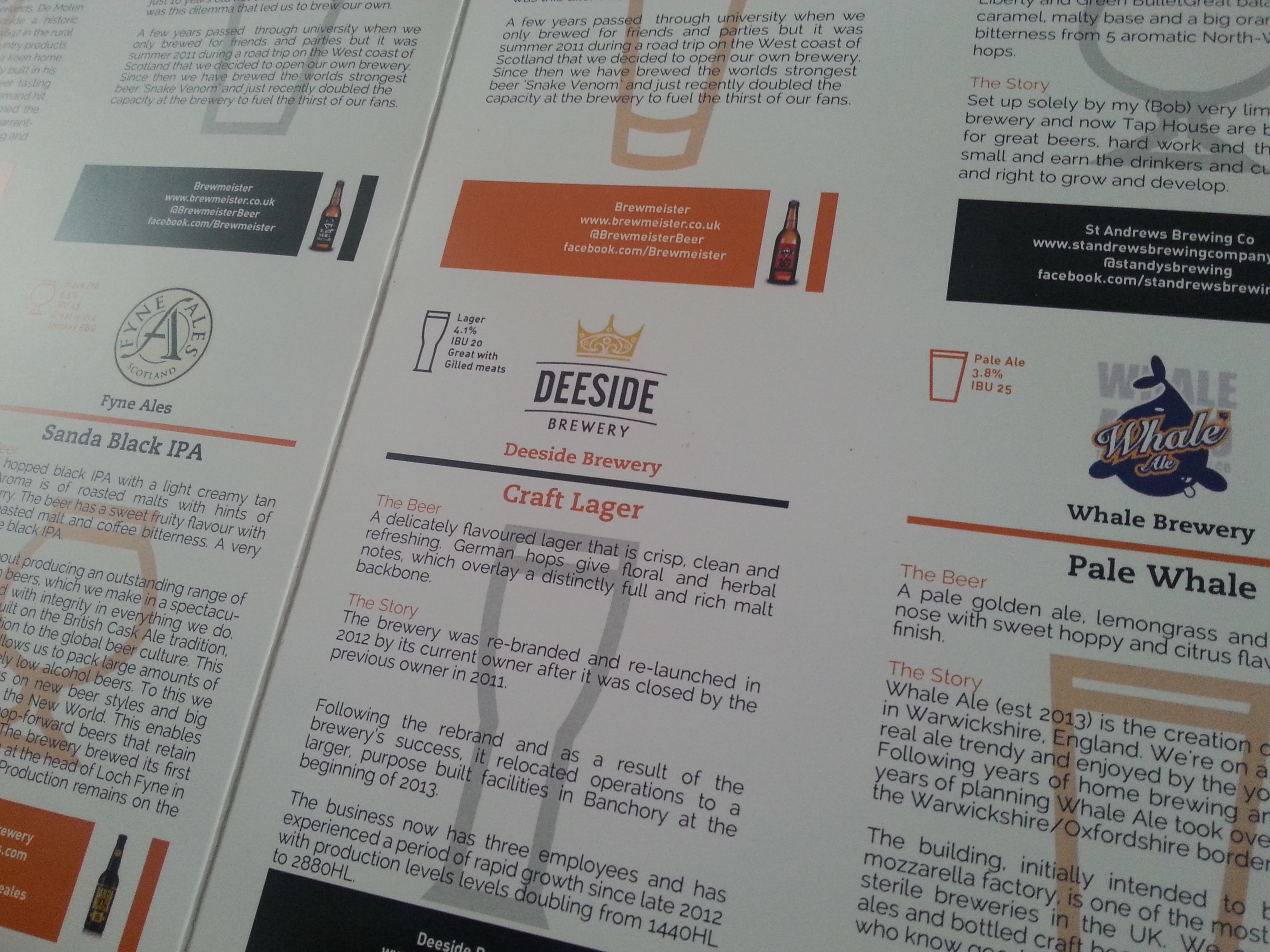
Deeside Brewery Craft Lager (4.1% ABV) – A very lively, crisp lager with fairly high carbonation. It’s quite lemony, but perhaps overly sweet, with a sharp, herbal bitterness that reminds just a little of a Belgian wit. A good lager but not as great as its ‘premium’ label might imply.

Scottish Borders Brewery Foxy Blonde (3.8% ABV) – Can’t figure out the reason behind the name. Was there a sleazier previous version of the label, or is it a tenuous nod to their “plough-to-pint” (farm-to-fork? glass-to-face?) rural credentials? At any rate, it’s an easy-going, fruity golden ale. A proper citrus zing to the first few gulps and well-conditioned too.

Fyne Ales Sanda Black IPA (5.5% ABV) – A beer I’ve enjoyed before, but rarely seen this far south. Technically impressive and highly accomplished, doing that Fyne trick of astonishing balance regardless of style or ingredients. It’s juicy white grape, gooseberry and lychee on a chocolatey base. Hard to fault.

Whale Ale Co Pale Whale (3.8% ABV) – Very bright, very pale beer but ‘normal’ almost to a fault. It’s mostly good: light, zippy citrus notes and a biscuity malt base, but it just seems a little too thin, perhaps due to a slightly rough, papery finish. Suspect it might be bad bottle, but would definitely try again on cask.


20140601_162507

Brouwerij De Molen Pale Ale Citra (4.8% ABV) – It’s been a while since I’ve enjoyed this masterful single hop beer. The balance of grapefruit juiciness and tartness with the carbonation’s prickliness and malty caramel is sublime. It’s one of those beers that conveys a real sense of its careful construction – unmistakeably brilliant brewing.

St Andrews Brewing Co India Pale Ale (5% ABV) – A lively pour of vibrant autumnal red-hued amber beer with a big, aromatic head. There’s lots of orange peel, a bit of lime, pepper and pine in that aroma, which translates onto the palate with a full, punchy bitterness. It gave me favourable impressions of Anchor Liberty and White Shield, and I really like the label.

Brewmeister Black Hawk (5% ABV) – Reddish brown ‘dunkel’. Hugely over-carbonated. The aroma is burnt sugar, toast and faint coffee, but very thin. The palate is very crispy in mouthfeel, very sugary, some faint coffee, acrid charcoal notes, a peppery roughness to the finish which is sharp and yet somehow flat. A catalogue of errors that never really comes together, and is unpleasant after a few gulps.

Brewmeister 10 (10.1% ABV) – This ‘nuclear-charged bock’ is more like super-charged Doom Bar. Bocks are admittedly on the sweet side, but there’s almost no bite, dryness or bitterness. Again, quite highly carbonated. Noticeably absent is a hint of the beer’s 10.1% abv (a worrying trend). Too fizzy, rather clumsy and not a glass I could get to the bottom of.

20140601_162353

I’ve been assured that Brewmeister’s beers won’t be featured by Beer52 again – apparently the deal with them was signed long before the recent revelations. Most of the other beers in the box were good, a few were fantastic and several were from brewers I haven’t had beers from before, which is kind of the point really.

I think Beer52’s offer is well-suited for people dipping their toe into the world of good beer. It’s a good place to start before ‘graduating’ or supplementing the subscription with one from a more specialist beer retailer, perhaps.

The great thing is that there are now a range of subscription-type services to suit you. If you prefer the community aspect and more in-depth knowledge and discussion of good beer, BeerBods might be more for you. If you’ve got specific tastes and want stuff as fresh as it gets, Eebria might be more up your alley. Or, if you already know your way around beer but want a bit of guidance, the curated boxes from the likes of BeerHawk might be more for you. But, if you like a ‘lucky dip’ approach that’s relatively cheap and you enjoy surprises, Beer52’s offer is pretty tempting (especially if you redeem the promotional code below).

Reader offer: You can get £10 off your first Beer52 box if you order using the promotional code ‘CRAFTY10’.

Disclosure: I was sent the box from Beer52 for free.

Blazing a Trail


IMG_20140515_200213

There’s a dumb way of thinking that judges each new bar or brewery in London to be somehow parasitic in its attitude towards the scene, trying to take a slice of the action for purely financial gain. Whilst that is no doubt the case in a handful of (usually rather obvious) cases, it’s a false and harmful view. Every part of London’s beer scene, especially those parts that make a go of it out in unclaimed territory, usually contribute something good. If they don’t, they soon fall by the wayside. Those that do contribute become the hub of a protozoic scene of their own. Last month I visited The Gun in the docklands and the Dragonfly brewpub in Acton, and it struck me that each of these pubs seem to be pioneering a mature and exciting beer scene in their respective areas single-handedly.

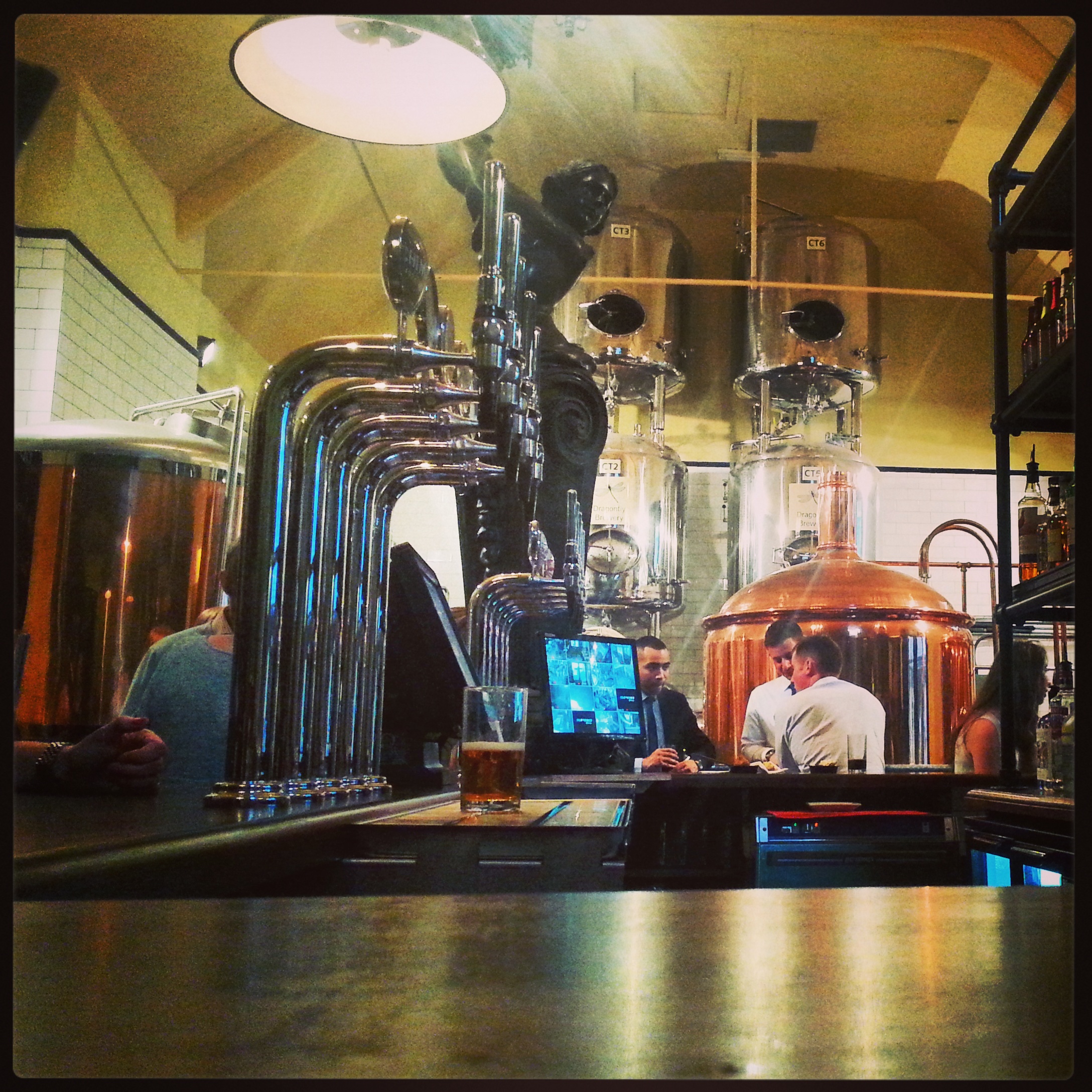
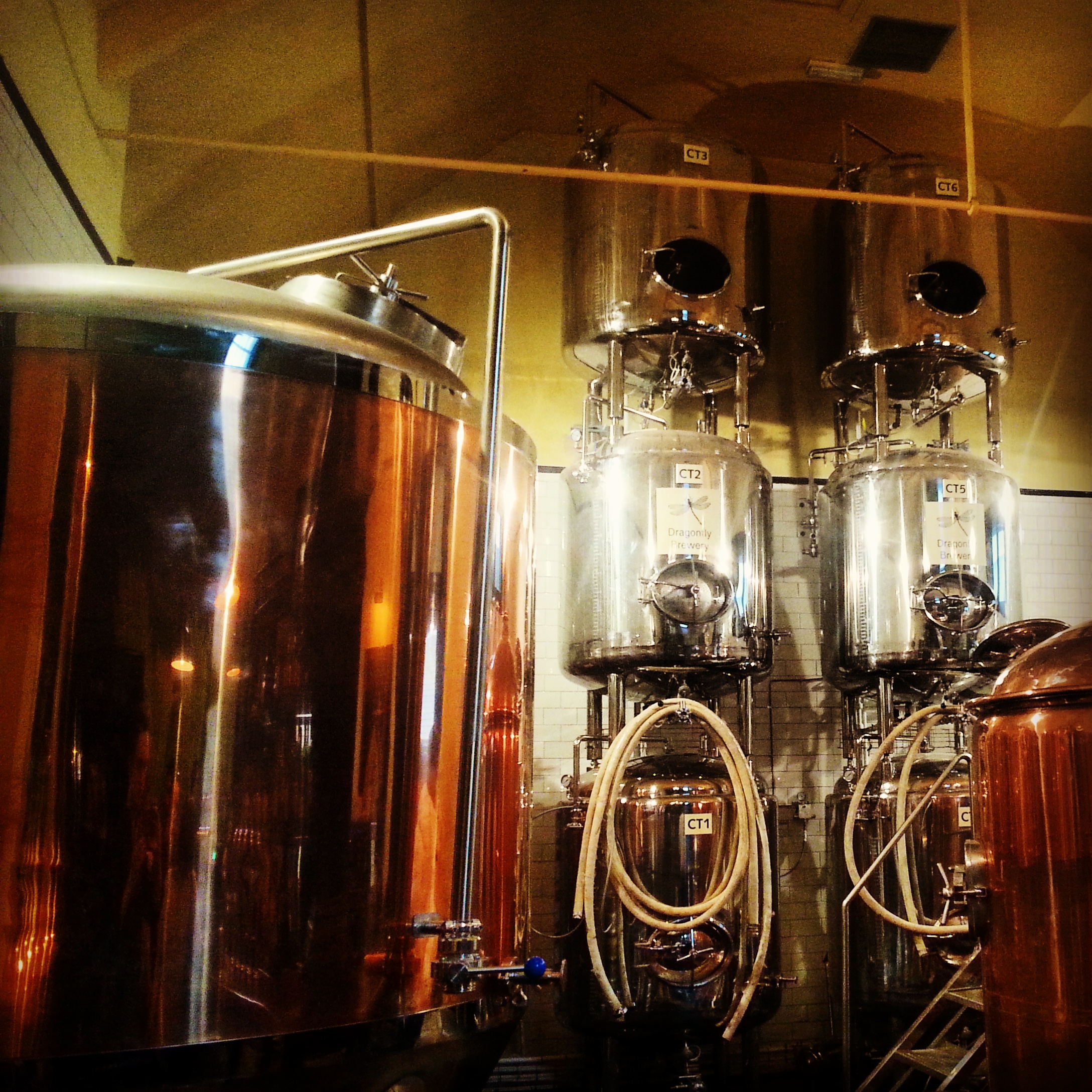
The Dragonfly Brewery at the George and Dragon pub in Acton officially launched on May 15th, and I was invited to taste some of the beers brewed by Conor Donaghue (formerly of the Botanist at Kew and the Lamb brewpub). The pub itself is a lovely place, it’s front wholly given over to the building that has been a pub since at least 1759, whilst the bar in the back room, a music hall once upon a time, is a gleaming chrome and brass affair on polished dark wood that evokes something more Continental, or American, or perhaps both, rather fittingly considering the beers being brewed.


IMG_20140515_213632

In a four-strong starting lineup (the strikingly authentic 2 O’Clock Ordinary best bitter; zesty, crisp and punchy Early Doors US-style pale; a sweet and subtly spicy Achtung Hefeweizen; and the nougaty-sweet and sharply coffee-tinged Dark Matter Stout), Connor has established a strong core range of technically accomplished and drink-by-the-pint beers that hint of great things to come. More impressively, the 2 O’Clock Ordinary best bitter on sale was the first beer Conor had brewed on Dragonfly’s brand new and oh-so-Instagrammable brewkit, installed behind the wonderfully-appointed island bar. You can read more about the beers and the brewery from the more detailed accounts of the launch night by Justin Mason, Matt Curtis and Steve from the Beer O’Clock Show.

IMG_20140515_191648

Aside from the great beers and the wonderful food (which include diet-busting beer accompaniments like deep-fried, breadcrumbed parcels of macaroni cheese and Dark Matter stout-battered black pudding fritters), the pub and brewery had something special about it. There was a certain shape, light and form to the place that seems destined to be a local focal point for good beer. The cosy front section of the pub, so reminiscent of the wonky-ceilinged and creaky-floored pubs of York, is a warm and welcoming place, whilst the airy, light and clean space of the brewery/bar area has the vibrant, lively atmosphere of somewhere like Camden Town Brewery. There’s no question that this place will be Acton’s flagship craft beer pub in no time.

Meanwhile, on the other side of the city, The Gun pub recently hosted its Spring Haze unfined beer festival. The Gun is a pub I’ve written about before, and between the excellent beer selection, high-end food and beautiful interior, there’s plenty to like about it (and, if that wasn’t enough, the people behind The Gun have something planned for Ealing which should be every bit as good, if not better). So why a festival purely for ‘unfined’ beer?

The issue of unfined and intentionally hazy beer has gained a bit of traction both in the blogosphere, and even on the websites of the national press, recently. The Gun’s manager and top beer bloke Barny sees the festival as a way of introducing the idea of unfined beer to a population that is either a) conditioned to be mistrustful of it and/or b) might not know anything about it. As more and more people enter the world of good beer through the offerings of the smaller, newer London brewers, more people will be trying ‘unfined’ beer and seeing it as normal. As far as they are concerned, if it tastes good, what’s the problem? For the more old-fashioned, the festival serves as an argument for the technical skill of the brewers represented on the bar.

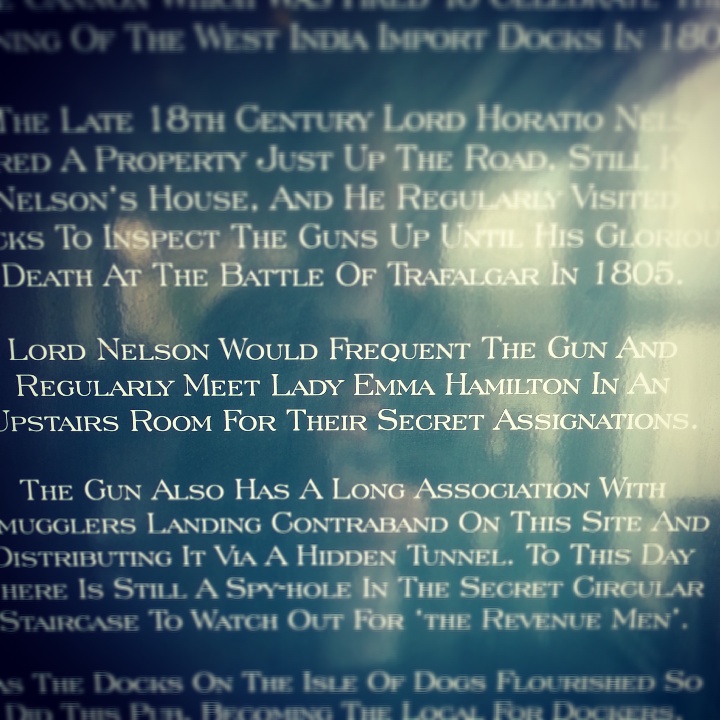
Once upon a time, the idea of a hazy beer festival might have been the subject of a cartoon in a local CAMRA magazine. Whilst the breadth of beers available at Spring Haze, including offerings from ‘unfined’ stalwarts Moor as well as Beavertown, Pressure Drop, Windswept, Weird Beard, Brew By Numbers, Arbor and Gyle 59, demonstrates a slant towards newer brewers certainly, the beers themselves were hugely diverse. Moor’s black IPA, Illusion; the coconut edition of Weird Beard’s Fade to Black, Windswept’s Weizen and Gyle 59’s Toujours saison show that these aren’t just the much-derided London Murky pale ales of many a railway arch – these are technically impressive, innovative and well-brewed beers. It helps too that the Gun is such a great pub, with a great history (see below).

IMG_20140524_163713

Opening a shiny, multi-faceted gastro-brewpub like Dragonfly or running an unfined beer festival might seem like the type of thing to go down in Dalston or North London, but these things are happening in what, for London craft beer, is the wild frontier. There’s not even a whiff of cynical cashing-in or bandwagon-riding. These are simply great pubs, providing the kind of experience that wins people over to a scene that can seem to be just that: a scene.

So whether it’s by the wings of a Dragonfly or the hot iron of a Gun’s cannonball, there’s many a trail being blazed. When the newcomers are this good, it shows that London’s craft beer boom has far from peaked, and that if anything, those in the first wave might need to up their game.

100 Best Breweries Bonus Content: Drinking in Brussels


2013-07-24 14.05.52
À la Mort Subite

The second piece of ‘bonus content’ exclusive to this blog: some more material that didn’t quite fit in to the new issue of Craft Beer – The 100 Best Breweries in the World. In the new issue is a guide to some of the best bars in Bruges, but there wasn’t quite enough room for this brief guide to some of the best bars in that other Belgian beer lover’s paradise, Brussels. (You can read the first piece of bonus content – an interview with Camden Town Brewery’s Head Brewer Alex Troncoso – right here)


As a city, Brussels has many districts, though many of the bars are thankfully within comfortable walking distance of each other. With more bustle than Bruges, it’s nice to break up your drinking excursions with visits to restaurants and museums, though it’s just as easy to find a bar with a particularly good selection and bunker down for an afternoon. It can be tempting to settle at one location and work your way through the ten or so beers that have caught your eye. Feel free to do so, the other pubs aren’t going anywhere, the staff are friendly, and they have food, so why not just relax?


À la Mort Subite

Rue Montagne aux Herbes Potagères 7, 1000 Brussels

http://www.alamortsubite.com

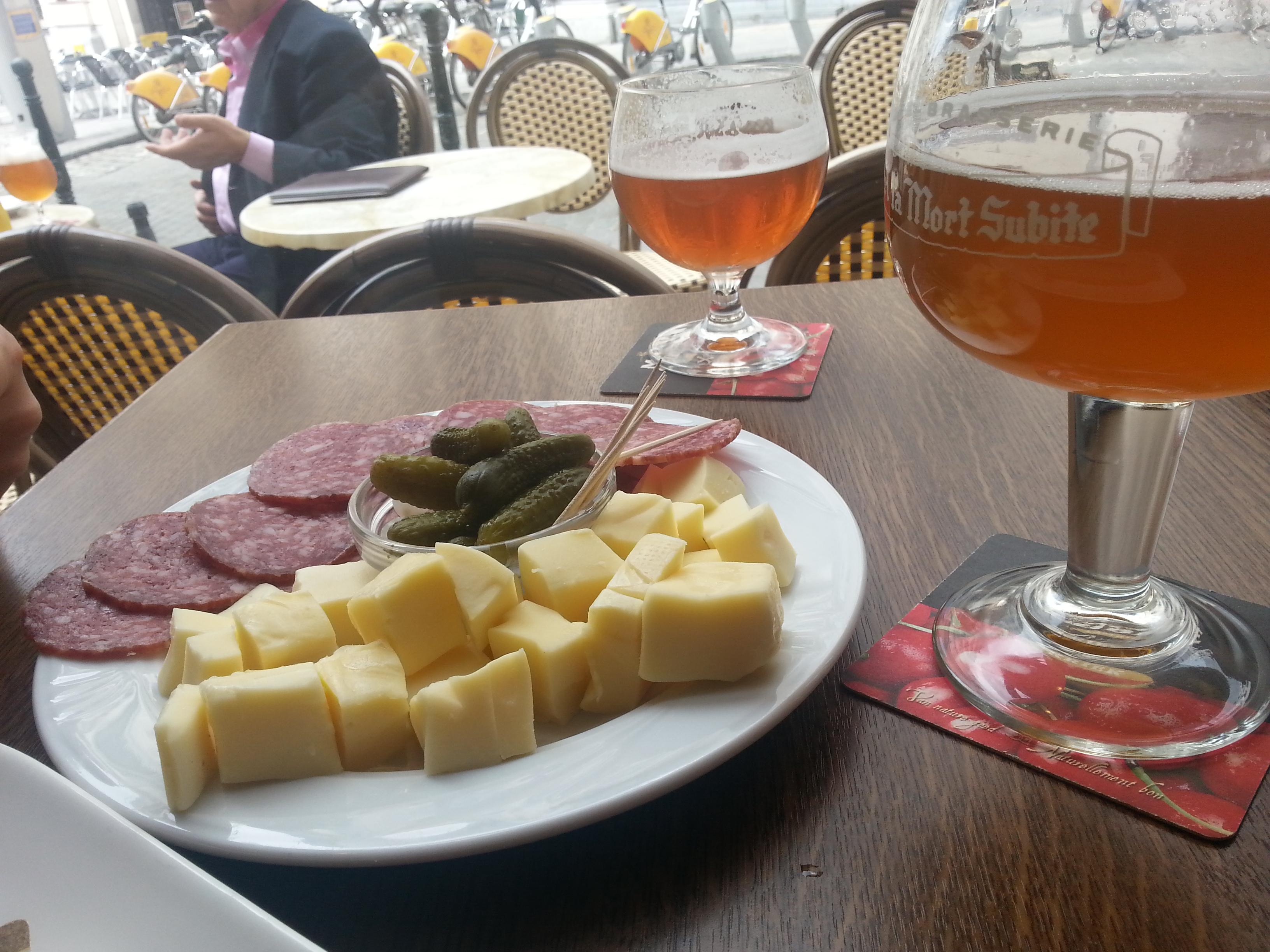
No visit to Brussels, or indeed Belgium, would be complete without a visit to this most iconic and decidedly Belgian of cafes. The bar’s own lambic blends are a must-try: Gueuze, Kriek, Faro, Peche and White Lambic are all available on draught, and best enjoyed with a plate of meat and cheese.


Brasserie Cantillon
Brasserie Cantillon


Brasserie Cantillon

Rue Gheude 56, 1070 Anderlecht

www.cantillon.be

Whilst not strictly a bar in the traditional sense, the fact that some of Belgium’s finest beers can be tasted here makes a visit to Cantillon an essential visit. After taking a tour of the brewery, relax with some fresh Rose de Gambrinus, different aged lambics, or a bottle of something to take home.


Delirium
Delirium Cafe


Delirium Café

Impasse de la Fidélité 4, 1000 Brussels

www.deliriumcafe.be

The slightly mocking tone of the monastic décor here gives foreigners a taste of what might constitute Belgian humour. Delirium may not be a Trappist brewer, but many if not all Trappist breweries have their beers represented at their bar here, along with classics from across the country.


Le Poechenellekelder

Rue du Chêne 5, 1000 Brussels

www.poechenellekelder.be

Near the famous Mannekin Pis statue, Poechenellkelder (or the ‘Poeche’) is a friendly, well-stocked beer bar with a small outdoor space and lively atmosphere. The eccentric décor of puppets, rare beer glasses and, well, stuff, is all quite charming. Helpful staff are on hand to guide you through the extensive menu.


Moeder Lambic
Moeder Lambic

Moeder Lambic

8 Place Fontainas, 1000 Brussels

www.moederlambic.com

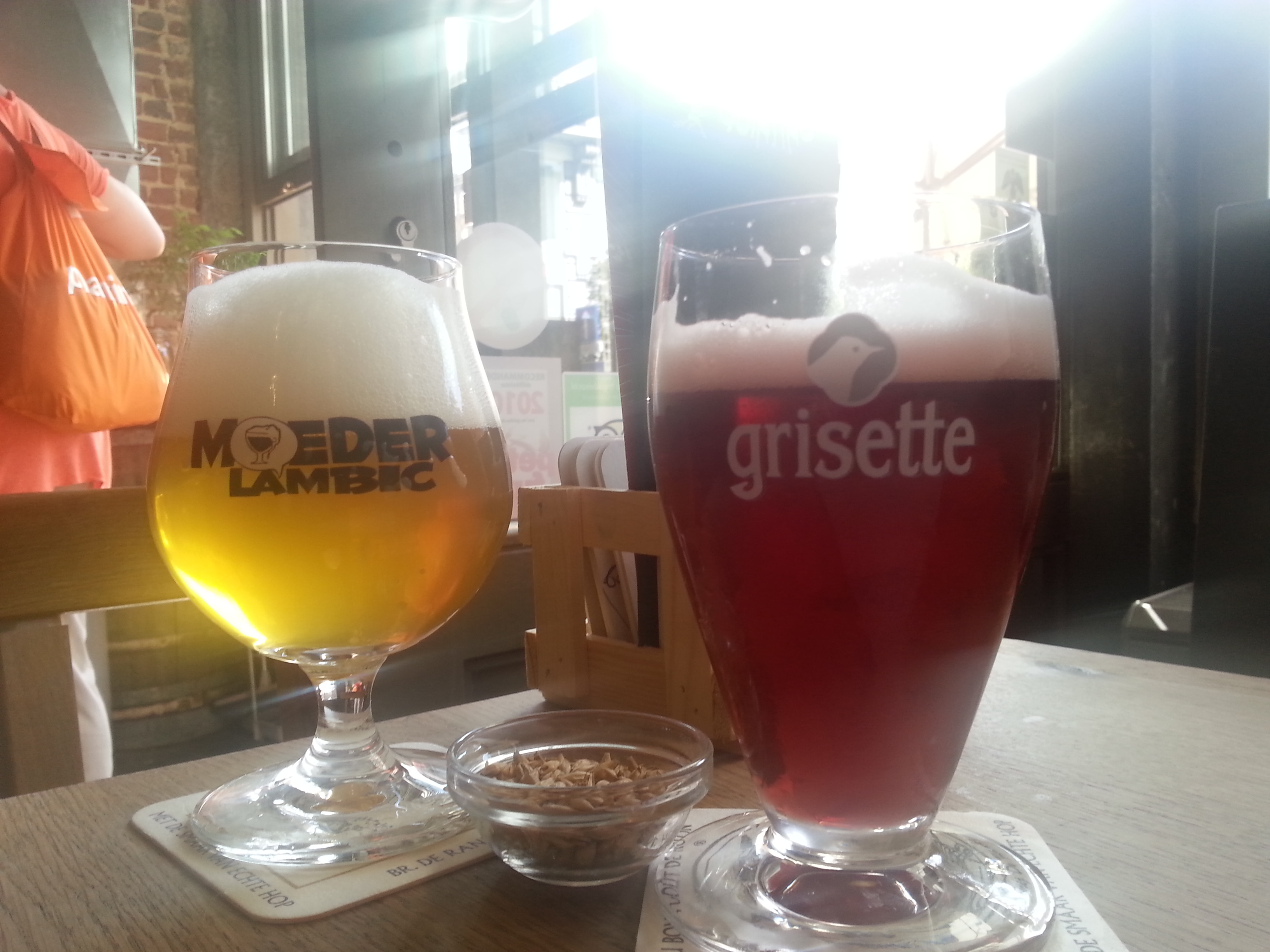
The original Moeder Lambic bar is in nearby Saint-Gilles, but this newer, city centre bar is the ideal end to a trip around Brussels. The range here is varied, and worthy of note for the occasional kegs of Gueuze Tilquin and offerings from Jandrain Jandrenouille and Brasserie de la Senne. Meat and cheese boards are de riguer food-wise.

2013-07-27 17.41.33

 You can read more guides to drinking in top beer cities in ‘Craft Beer: 100 Best Breweries in The World’, now available in newsagents and online.

New Dog, Old Tricks

(‘black white red all over’ by istolethetv, from Flickr, under Creative Commons)


I know, I know. Writing about BrewDog is so 2009, but then, so is what’s been happening between the brewer and the Portman Group this week. I also know that this is how the BrewDog PR model works – people writing about them, so they don’t have to – but there’s something important to be said here. In this latest spat, Portman took a deep – and from its own point of view entirely justified – disliking to the ‘live fast’ language on Dead Pony Club’s label.

BrewDog’s response was much in line with what we’ve seen years ago. The sinking of eager teeth into that always-exposed juicy flank of the drinks industry: its clumsy and flabby self-regulatory body the Portman Group. Portman totally had it coming, and deserved every spit-laced snarl, but it all felt very familiar, didn’t it? The reaction online was very much ‘same-old, same-old’, but I was concerned by just how ‘retro’ this seemed.

Lately, we’ve seen signs of what could be called ‘phase 2’ of BrewDog, which began with the opening of the more subdued, mature and less branding-heavy bar in Shepherd’s Bush (now easily their most celebrated in London). Was this a one-off, we wondered, or the start of something new? The appearance of the newly-opened BrewDog Sheffield and refurbished beer board of BrewDog Shoreditch suggested that this was The New Way, and indicated, along with some more thoughtful and artistic recent beer releases, access to Cicerone training for staff and shareholders, and a very gradual attitude shift, that we might be seeing a transformation into a newer, maturer BrewDog.

No longer would they need to shout, point and make an exhibition of themselves to get column inches, demand they can’t supply, or popularity beyond their grasp. People come to BrewDog now, not the other way round, thanks in part to the growing international chain of bars. The company (which, I note, is not a term ascribed to many other breweries, perhaps because so few of the newer wave have such a firmly-established estate) is a definitive peak on the UK’s craft beer landscape that we can all point to and say ‘things are different now, look at that‘. So why set this transformation back for the sake of a few (albeit deserved) laughs at the Portman Group?

Based on the subject of recent surveys sent by email to shareholders and BrewDog website users, there have been hints that the brewer’s branding itself is potentially subject to change. Some questions asked what the labels seemed to imply about the company and the beer in the bottle. My own view is that the branding is well overdue an upgrade to keep up with the best of UK’s scene (and why they haven’t asked Johanna Basford to design all of their labels is beyond me). Perhaps, in keeping with the forward-looking ‘phase 2’, a rebrand is on the horizon that would result in labels that wouldn’t have raised the hackles of the Portman Group in the first place.

After all, that label copy is from a couple of years ago, and it seems that BrewDog’s response to the Portman Group’s ruling came from a similar time period. I wonder if, had the Portman Group left it a few months, there wouldn’t even be a label to complain about. As it stands, it feels like we’ve just done a bit of time travel, with no discernible benefits for anyone. BrewDog came under attack for something quite old and responded with the only weapon at their disposal, one just as dated.

As a shareholder, I’m looking forward to seeing more of ‘phase 2’ BrewDog at this year’s AGM, and I hope this week has just been a blip on an otherwise promising progression to something better.

Traditionally Modern

2014-04-24 18.45.40
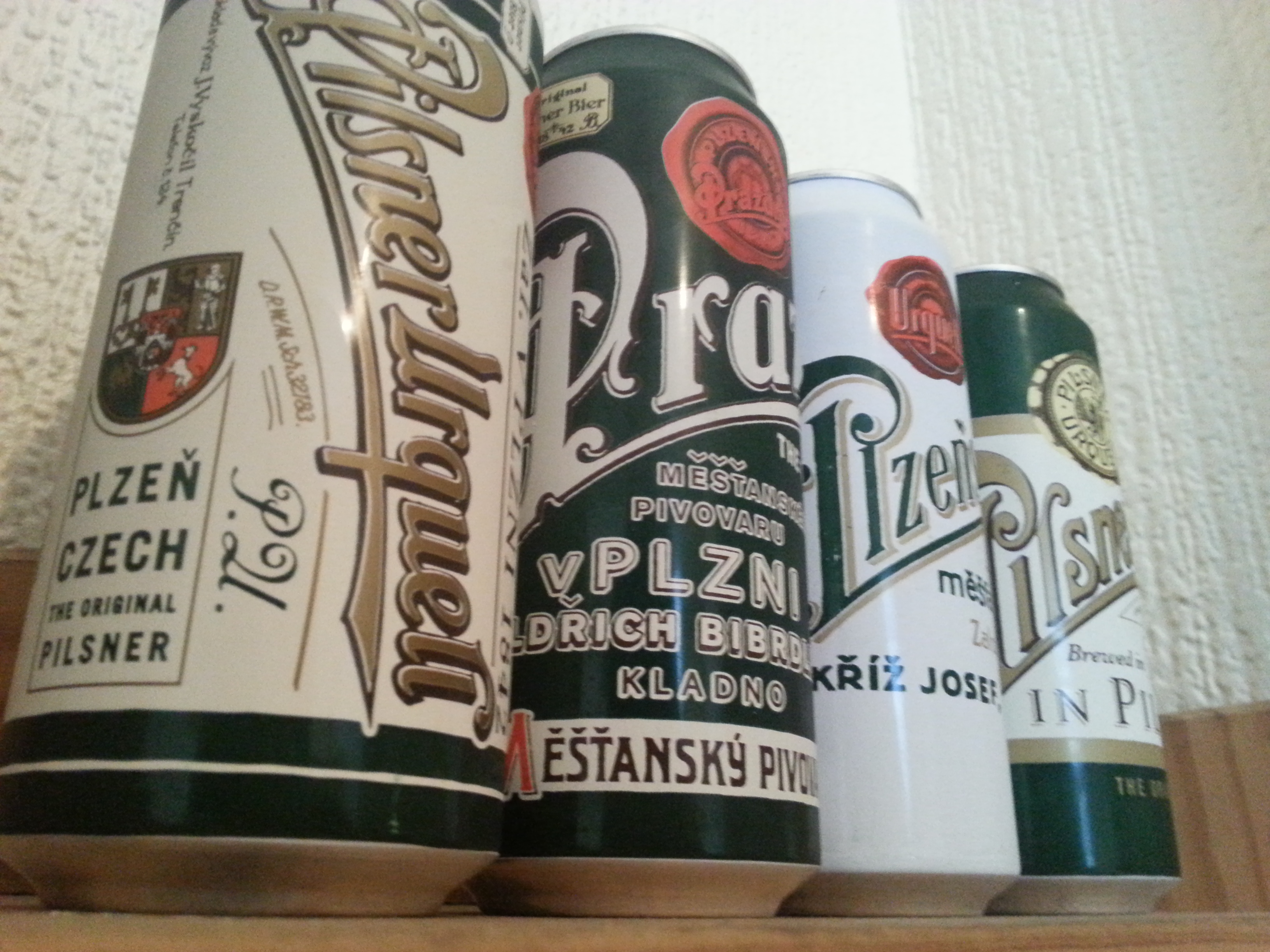
The new Pilsner Urquell cans coming soon to the UK


Breweries with an illustrious heritage often struggle to shake off the fusty, traditional image that grates with modern artistic design. In an effort to stay modern and relevant, any attempt  at a violent rebrand is usually clumsy, and often ends up sacrificing what people liked about the brewery’s image in the first place. It’s refreshing then, to see the beautiful labels of the new canned version of Pilsner Urquell that should be arriving on these shores in the next couple of months.

As you can see from the image above, these aren’t just any labels. In a nod to the brewer’s rich history, Urquell are selling their new cans in four packs, with each can bearing a different, limited edition label, based on four different designs from the brewery’s archives (my favourites are the two on the left). It’s slightly reminiscent of the arty labels that Becks had commissioned a while back, yet in Pilsner’s case I think this really keeps true to the brewery’s history and branding without pandering to fashion.

They look really, really good, especially in the rather *craft* cardboard sleeve, and the beer inside tastes on a par with draught Pilsner Urquell in terms of freshness and mouthfeel. They should be hitting shelves in the UK in time for summer.

2014-04-24 18.43.17

In more Pilsner packaging news, Urquell will be selling bottled Pilsner entirely in brown glass in the very near future (EDIT: likely to arrive in the UK next year), and there are plans for more of their Tankovna (brewery-fresh, unpasteurised pilsner tanks) to be installed in pubs both inside and outside of London. I’ll be discussing the Tankovna version of Pilsner in a future blogpost, but rest assured, it’s damn good stuff. Like the freshest pilsner you’ve ever tasted, with the smooth, quaffable mouthfeel of cask ale.

The brewery has also sent some wooden casks of the unfiltered version of Pilsner (enjoyed by the attendees to EBBC13 last year) to several pubs around London this week. There’s info about where you can find some today or tomorrow on this page of their website (has an age checking thing).

Thanks to Mark Dredge for getting me an advance four-pack of these cans. Yet more evidence, if more evidence were needed, that 2014 will see the Summer of Cans.

2014-04-24 18.45.14