When the brilliant Brewhouse & Kitchen Islington opened near Angel station last year, I was embarrassed to learn that there were already successful branches of the brewpub group in Dorchester, Poole and Portsmouth, of which I was completely unaware. My blinkered capital-view had hidden these excellent brewpubs from me, and it gave me a dose of what I call London Guilt. My partner’s family lives in Bristol, so when the latest branch opened there last month, I was determined to check it out on our next visit.
I couldn’t make the launch event sadly, a disappointment all the more crushing for the fact that the man who was the body of Darth Vader (Bristolian bodybuilder David Prowse) was there at the party. Like the other Brewhouse & Kitchen brewpubs, the brewers here take their cues for beers from the city the pub is in. Naturally, a Sith-influenced Papa Darth oatmeal stout is available (‘on the dark side’ jokes abound), alongside Yankee Cabot (named after the Italian explorer who was a citizen of Bristol and after which many landmarks are named), Deception Rye IPA (named for Derren Brown who studied in Bristol and first performed there) and others. All their own beers are brewed onsite in the very visible and pretty brewkit, and as seen in the picture above a decent array of keg and bottled beers are also available.
The beer that really impressed me both on my first and subsequent visits was the 3.9% Hornigold Blonde Ale, the vibrant pint pictured above. Hornigold was the mentor of Bristol’s more famous pirate son: Blackbeard, and the brewers clearly thought his name would look nice on a golden ale. I’d arrived at the bar early afternoon and fancied something fairly light and easy-going, but was blown away by the peach-and-melon sweetness running through Hornigold, sharpened by a juicy grapefruit finish. It was remarkably similar to a great pint of cask Oakham Citra, but maybe 18 months or more ago when Citra was in its best form. Hornigold was a pint upon which I lavished the highest compliment: the same again, please.
I had doubts about posting this hearty recipe today, given how the weather has massively improved recently, but apparently it will go back to cold, blustery rain soon, so you’ll be thanking me later.
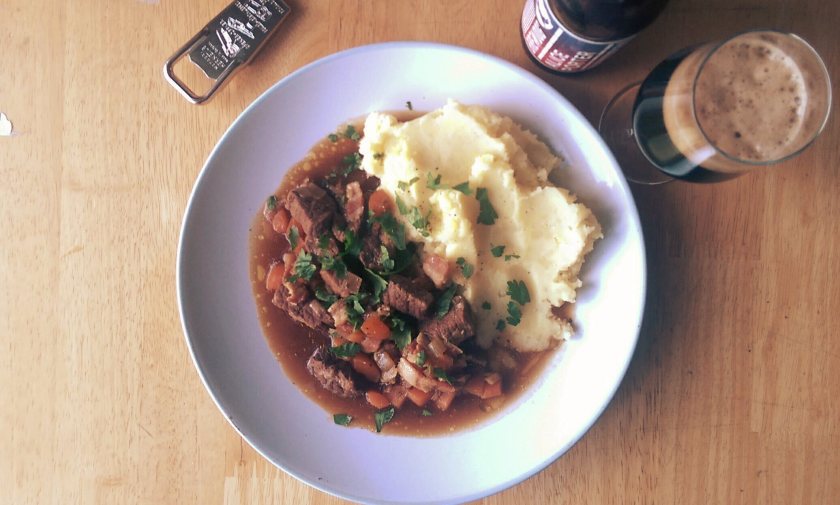
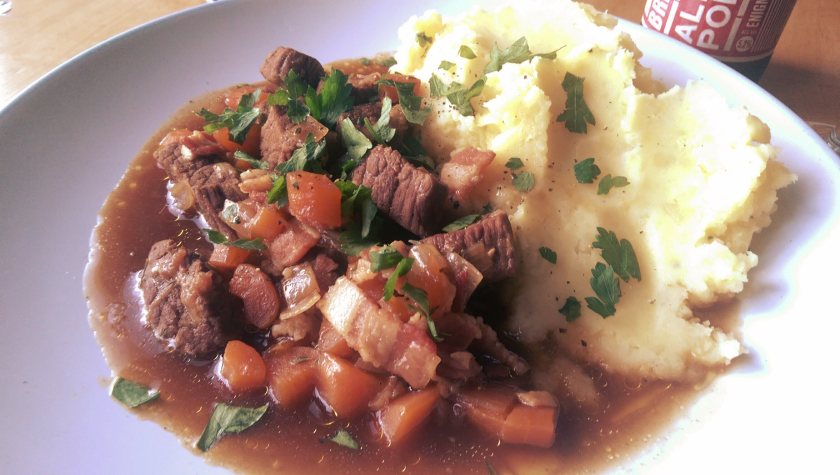
Beef stew with beer in it is a simple, classic dish that every beer (and beef) lover should have under their belt, ideal for banishing the last of the colder days. I love making a meal that’s a strong, simple idea, with loads of flavour but not loads of ingredients, just the right ones. I hate seeing those once-and-never-again-used jars of unobtanium and eye of newt at the back of the cupboard, when I only bought them so half a teaspoon would go into something I’d never make again. This is a full-flavoured stew that uses good quality, everyday things to tasty effect – but using which beer?
BrewDog’s first seasonal beer of 2015, the resurrected Alice Porter, is now at 5.2% and without the leafy blackcurrant notes of Bramling X and dessert-like flavours of vanilla, but it still has a wonderfully full, sweet and nourishing body and velvety mouthfeel, sharpened by the oily lemon of Sorachi Ace. In this dish, the idea is to enrich that beef and sauce with the oaty, chocolatey notes of the porter, and get the oily lemon notes to interact with the thyme and vegetables. Of course, there are lots of beers you could use here – oatmeal stouts, brown ales, Belgian dubbels – but generally you want something that’s rich, darker, sweet without too much roast or bitterness.
Ingredients:
The below makes a portion for 1 person, so scale up as you wish:
200g stewing steak
1 rasher smoked streaky bacon, chopped
1 large shallot, finely chopped
1 garlic clove, finely chopped
1 carrot, chopped to roughly 1cm sq pieces
2 tbsp vegetable oil
1 tbsp butter
1/2 a bottle of porter (in this case BrewDog Alice Porter)
150ml beef stock
Thyme, small bunch
Salt and pepper, for seasoning
Parsley, finely chopped, to serve
Cooking time: 90 minutes
Method:
1. Heat the oil in a heavy-bottomed pan, season the beef with the salt and pepper and sear it on the outside in the pan. You don’t need to fully cook it through, just brown the outside. Depending on how much you’re cooking, you might find this easier to do in small amounts, rather than all at once. Set the beef and the juices aside once you’ve seared all of it on all sides.
2. In the same pan, stir fry the bacon for a few minutes, then add the butter, onion, carrots and garlic, softening the vegetables for about 7 or 8 minutes.
3. Now return the beef and its juices to the pan, stir everything through, then add the thyme, porter and beef stock (but keep about 100ml or so of stock back). Make sure the liquid covers everything. Once it’s simmering, get the heat down low, cover the pan and leave to cook for about an hour and a half. If it starts to look like it’s drying out, add some of the reserved stock.
4. Once the stew has thickened and the beef is tender, taste and season if necessary. Garnish with the parsley and serve with potatoes however you like them (for me you can’t beat mustard mash) or with some crusty bread and butter. Oh, and a glass of beer.
Beer Match:
If you have more left, Alice Porter is perfect, picking out the softer herbal elements of the dish as well as boosting the thick, beefy goodness. Alternatively, pick your favourite dark beer in the cupboard. Westmalle Dubbel, Kernel Export India Porter or an American porter like those by Anchor or Sierra Nevada are great matches for this type of dish. As ever, balancing the intensity of flavour in both beer and the food is key, but it’s also important to find other aspects they have in common – comforting sweetness and complex flavours. Enjoy!
One of the textbook rites of passage for the modern, budding beer geek is to buy ‘single-hopped’ beers to find out the flavour and aroma characteristics of specific hop varieties. With each flavour, some increased knowledge or understanding of it is (hopefully) stored subconsciously, and the next time we experience it, it becomes a little easier for the firing synapses to locate the relevant file of previous experience.
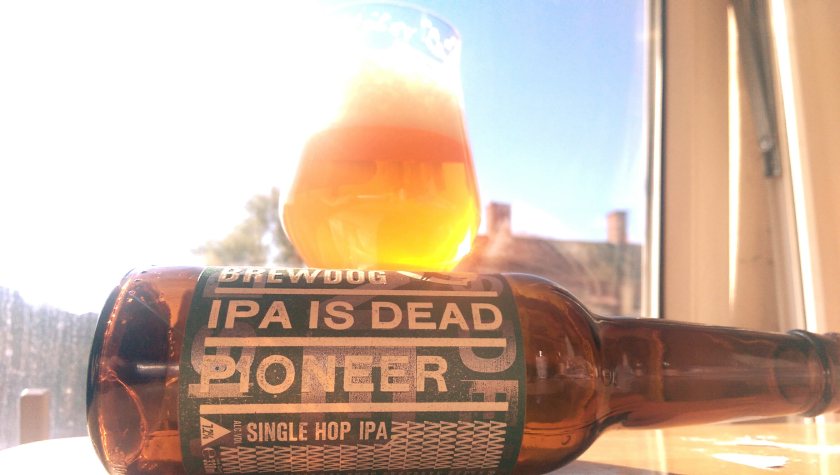
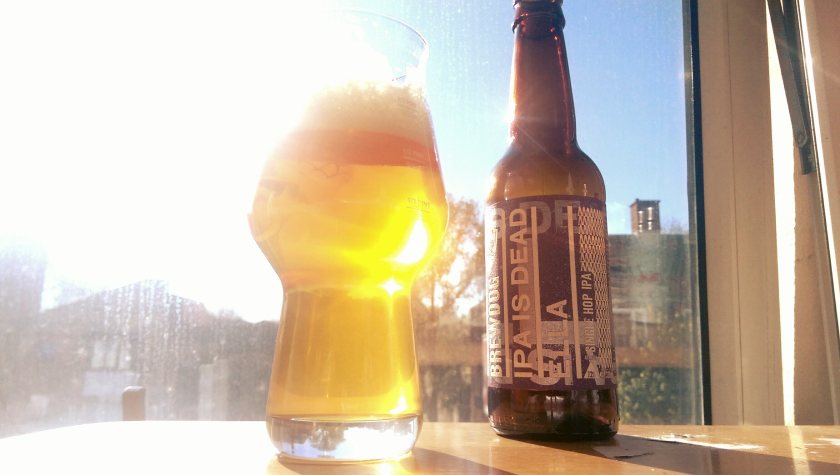
A brewery that has truly committed to the single-hopped idea is BrewDog, which recently released its fifth annual IPA is Dead series. The hops selected are chosen based on a combination of public interest (including suggestions from social media) and, mostly, I suspect, brewer curiosity. With new BrewDog bars opening on an almost monthly basis, it’s getting easier each year to pop along to your nearest one on day of release and order a flight of the latest series to try them out. For some, the appeal is simply to taste something they haven’t had before. For homebrewers and committed beer geeks, single-hopped beers represent an opportunity for personal development and gaining valuable experience.
The thing is, most hops, like most people, are normally only very good at one or two things, and not many people can even claim to be that talented. Single-hopped beers require the hop variety in question to be used at multiple points in the process, instead of just where they would normally perform best. Sometimes the ‘truth’ of a hop’s character is blunted or stymied by it being used at every stage in the brewing process. Others, meanwhile, revel in the challenge and reveal incredible depths, clarity or raw flavoursome power.
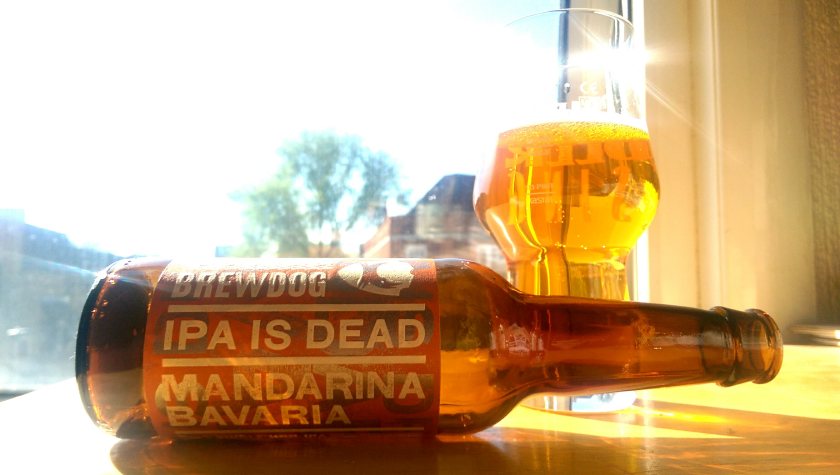
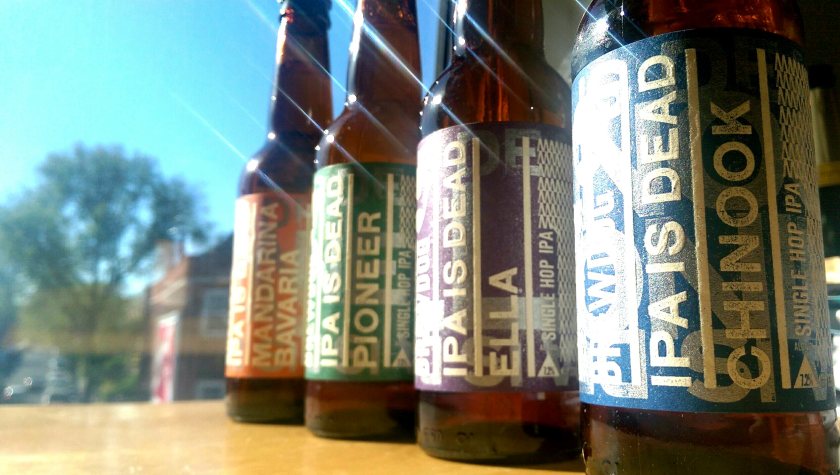
The latest BrewDog IPA is Dead series sees another eclectic mix of craft beer favourites and up-and-coming new varieties: Mandarina Bavaria (a great potential Bond heroine name), classic US bitter monster Chinook, juicy Oz-German hybrid Ella and modern British hop Pioneer.
Mandarina Bavaria certainly delivers a lot of sweet orange and pithy peel in its aroma. There’s also something stickier and alcoholic like peach schnapps, perhaps revealing the hop’s difficulty in overcoming the beer’s 7.2% abv. I found the Mandarina Bavaria very sweet, but with a tangy lemon sherbet flavour rather than full-on mandarin. The bitterness is sudden and schizophrenic – twisting juicy fruit into a raspingly dry finish reminiscent of Jever. The strength of the beer was much less evident in the flavour, in fact I gulped it down like it was a juicy and bitter pale ale, so here the hop really shined.
Pioneer, a British hop, can have bright lemony flavours and woody, cedary notes when used well. In a 7.2% IPA, the flavours seem to come down quite hard on woodiness, almost piney in the finish, whilst the aroma was somewhere between warm lemon curd and marmalade. It didn’t quite gel with the strength and malt profile of the beer, but certainly taught me in explicit terms what Pioneer tastes like.
Ella, meanwhile, is an Australian variety related to the super-peachy aroma hop Galaxy and the German bittering hop Spalt. Brewers like its flavour-efficiency, as it can be used in moderate amounts to replicate full-bodied continental lagers, or in larger amounts to deliver massive tropical juiciness. As it’s the only hop in the beer, Ella turned the IPA into a dangerously quaffable blend of sharp bitter grapefruit, tart lime and caramelised peaches. The finish is actually my favourite part, leaving just enough of each flavour to make the mouth water for more.
Finally, Chinook delivered a somewhat predictable hammer-blow. A hop that can be used for bittering or aroma, Chinook is a notably piney and spicy US hop that tends to dominate the finish of any beer it’s used in. It’s a favourite of BrewDog’s so I had a fairly good idea of how it would taste, and I was glad I elected to drink this one last. The bitterness and pronounced pine and woodiness was palate-shifting.
This is the funny thing, though: whilst each of the beers seemed to have markedly different levels of bitterness and hop flavour, all of them were brewed to have 75 IBUs. As any brewer will tell you, that number on the brewsheet is not the same as perceived bitterness in the final beer – the reason why a 45 IBU pale ale can taste less bitter than a 45 IBU pilsner. Brewing each of these beers to 75 IBU isn’t necessarily the best showcase of each hop, and often, individual hops, like people, perform best when partnered with others that have different strengths.
Since this was the first time I’ve had all four of the series in bottles at home, so I couldn’t resist flipping the concept on its head. In previous releases, the hops used for IPA is Dead were often so diametrically opposed that it would never occur to many people to try blending them, but this year’s release seemed to have traits that could work in unison. After opening each bottle I poured roughly 100ml into a growler that I kept in the fridge, and after tasting all four I had an equal-parts blend of each beer.
The result was surprising, in that each of the component beers could be tasted and seemed to interact with each other – the resinous spike of Chinook evened out the peachy syrup of Ella, the lemon and orange in Mandarina Bavaria softened the bitter, woody tang of Pioneer – but whilst it broadly worked, it was not in any sense a complete beer. Each beer had used its hop at all addition stages, for bitterness, flavour, aroma and dry hop, so the positives aspects were spread thinly across the palate. What would be more interesting, would be if the IPA is Dead series starred a fifth beer, where the brewers used the hops from the four single-hopped beers in different proportions at different stages to best suit their characteristics. Just as important as learning what hops taste like when working alone, is learning how they can work together. The lessons learned from the flavours of the single hopped versions could be galvanised in the the fifth, when you see how and when they should be used to best effect together. What do you think?
—
Thanks to BrewDog for sending me this year’s IPA is Dead series.
It’s Wings Wednesday that typically brings me to North Finchley’s The Bohemia pub, the recently refurbished flagship pub from the owners of The Bull in Highgate. The offer of 500g of spicy Buffalo wings (some of the best this side of the Atlantic I’ve been assured) for five pounds is hard to resist. As North London goes, The Bohemia is very north, but more than worth the extra minutes by bus (134, 263, N20, 460, 82) or tube (North Finchley, Woodside Park) when you get there.
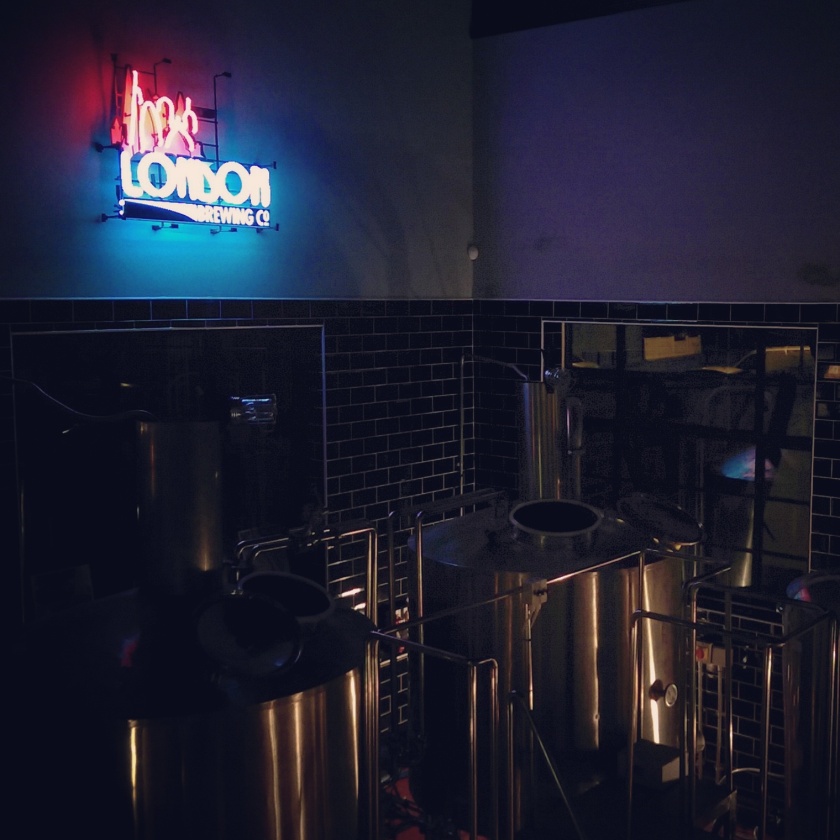
The place is wide and deep, lavishly furnished and skilfully halfway between modern and traditional, in proportions more in common with a spacious, town centre pub than anywhere else in London serving La Chouffe and Veltins on tap. Of course, the key difference here is the Bohemia is home to a brewery as well as a well-stocked bar – the London Brewing Co, which also brews at The Bull. Whilst the beers brewed at The Bull are packaged in casks, The Bohemia’s kit generally brews beer for keg.
The brewers have already turned out a wheat beer, stout, rye IPA and session IPA, which are naturally all available at the bar just a few metres away. Currently the most impressive of these are the ‘Stout’, displaying a creamy coffee yet dry, herbal hoppy character I’d most recently enjoyed in O’Hara’s Stout in Dublin, and the ‘Upright’ session IPA, which tasted every bit as good as fresh Founders’ All-Day – orangey, oily, boisterously bitter – but fresher. Brewer Daniel Vane has recently returned to London Brewing Co with plenty of ideas in mind, as recent shots of a brewday for a lychee pale have shown. He’s assured me there’s plenty more in the pipeline, some of which will be available at the forthcoming Northern Line Beer Festival on 22-26 April, which will feature beers from a number of celebrated Northern-Line-based brewers (including the new, Derek Prentice-helmed, Wimbledon Brewery) and will also include beer and book matching from Pete Brown and a beer-paired dinner at The Bull.
What I love most about The Bohemia, even more than the wings (somehow), is that there’s damned good beer there, made just a few steps from the bar. That distance travelled to the pub itself is compressed, folded and shrunk somehow by the difference made by that short distance between the brewhouse and the bar. There’s nothing quite like taking a gulp of daisy-fresh session IPA and being able to see where it was lovingly brought to life.
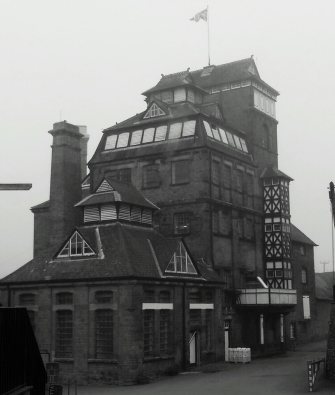
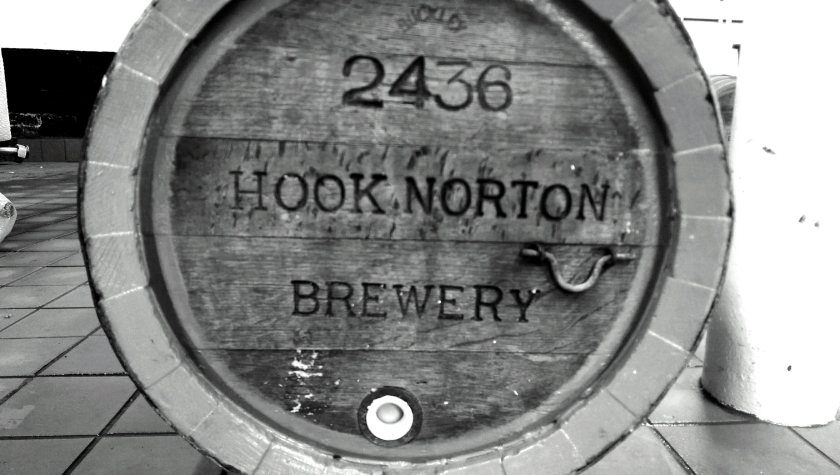
The museum section of Hook Norton Brewery has a lot of the antique brewing paraphernalia you might expect: black and white photos of stern-looking workers from a time when smiling for the camera was not allowed; barrels, the usual barrows, bottles (the three Bs); and pieces of defunct brewing equipment large and small, including, interestingly, an old wort cooler. It was beside this old cooler, essentially a tall, corrugated sheet of metal standing in a shallow trough, where friendly and encyclopedic tour guide Monty explained the brewery’s attempts to modernise over the years. The equipment they use now – a far more modern and typical heat exchange system tucked away in a small room on the third floor – dramatically reduces the chance of infection since it’s a sealed unit. The point was made at several points in the hour-long tour that any inconsistency between brews is a bad thing, and quite right too.
Hook Norton Brewery in Oxfordshire
Just as frowned upon now is the brewery’s one-time reliance on wooden barrels, which naturally caused some undesirable bacterial infections over time and, in Monty’s words, some ‘vinegary pints’ back in the day. Even the stocks of modern aluminium casks have been recently refreshed to ensure the beer inside arrives in the best possible condition. It might seem strange to focus on these two seemingly normal upgrades in history of a brewery, particularly one as traditional as Hook Norton, but the place had some surprising secrets tucked away. The brewery was built in 1849 and is a classic Victorian tower brewery, relying on gravity to feed the ingredients from one stage of the brewing process to the next. Its core beers are Hooky, a bitter, and Old Hooky, its best bitter. It also brews a mild, a double stout and a range a of seasonal ales. It even has a functioning steam engine, which is still occasionally used to operate the grist mill, and once also contributed to boiling the wort in the copper, heating the building and pumping liquor from the well. Shire horses are regularly used to pull a dray of beer to pubs nearby.
The original, wooden-hatched mash tun, and in the background, the newer stainless steel version.
Refurbished versions of original equipment are used in various parts of the brewery, including the aforementioned grist mill, which dates back to 1899, and the mash tun, which has wooden hatches that are still surprisingly efficient at insulating heat. There’s a sense here that the modernising of the equipment at Hook Norton happens when absolutely necessary, and even then, reluctantly. Still, it was with some noticeable embarrassment that Monty showed us the even older method of cooling the wort, on the top floor of the second-highest tower of the brewery. What I saw there took my breath away, and transported me back to a dusty attic in Brussels I’d visited just weeks before. On the brewery’s fourth floor, Hook Norton once used what they referred to as a flat cooler, but is recognisable to anyone who has visited a Belgian brewery as a koelschip.
The now-defunct ‘flat cooler’ on the fourth floor. Note the wooden slatted windows.
At Cantillon, which I’d visited most recently in February, the wooden slatted windows are opened to allow wild yeast and bacteria to inoculate the cooling wort. At Hook Norton, the windows were opened to lower the temperature inside, but this still undoubtedly resulted in infection, and unwanted foreign bodies. Specifically, the rumours among the locals at the time was that bird droppings could be in your pint. The flat cooler was decommissioned in the 1970s, and it’s easy to imagine the brewery at the time struggling to keep up with ever-consistent, box-ticking keg beer that was on the rise at that time. I couldn’t help wonder though if something had been lost, or an opportunity missed in that era.
Whilst the flat cooler is unlikely to ever see action again, wooden barrels could once more be used to contain and dispense Hook Norton’s beer in pubs. Two young chaps on the brewing team have free use of a small ‘pilot brewery’ on the ground floor near the cask racking plant, where they are currently experimenting with producing stronger ales to be served from the wood. It’s likely that these will be old ales or stouts.
After the tour, Monty took us back to the visitor centre bar and we tasted our way through small glasses of five different ales. The biscuity body and leafy bitterness of Hooky is evident in many of the brewery’s other beers, the most noticeably different being Lion, a self-consciously ‘pale and hoppy’ beer for the modern cask drinker and the Hooky Mild, which was slick, cakey but light. Two ‘Brewer’s Selection’ beers, the Double Stout and Flagship English IPA are also kegged in small amounts by contract at Cotswold Brewery but weren’t available at the time. It’s easy to be dismissive of the simple English charms of Hook Norton’s traditional beer styles, but they are good beers made well, and in the spring sunshine of the Oxfordshire countryside, they make perfect sense.
At the Pear Tree Inn just down the road from the brewery, I sat with a pint of Julie’s Jester, a pale ale brewed on Hook Norton’s pilot kit for a long-serving landlady of one of their pubs. Hopped, as the name suggests, using the new UK hop Jester, it was a very summery pint of floral aromas, simple malt flavours and citrus-peel bitterness. I enjoyed it a lot, and it hinted at an open-mindedness to new ideas and flavour profiles. But, sat there in a traditional country pub with its hop garlands above the bar, freshly made baguettes of ham and beer mustard and foaming pints of daisy-fresh cask ale, I couldn’t help but wonder, and imagine, if brewing in this country might have become something quite different if the wooden barrels and koelschips hadn’t been seen as antiquated oddities, but precious, historic and artisanal elements of brewing culture. Now that we have returned to appreciating what they can do, it seems strange we ever gave them up.
—
A tour of Hook Norton Brewery is £12.50 per person, including a hour-long tour and guided beer tasting. Tours must be arranged in advance.
A new photo-blog series, taking in the most interesting bars and pubs in London and beyond.
Alan Yau (founder of the Wagamama chain and owner of several Michelin Star-awarded restaurants) is one the last people you might expect to get in the pub game. In what is seen as a dramatic departure, the OBE and restaurateur has given equal focus to beer as well as food at his latest venture – a ‘Chinese-influenced gastropub’ in Soho. The area has been worn down by its reputation into a bit of a parody of itself, but in doing so provides a number of unusual and striking venues, of which The Duck & Rice is undoubtedly one. I couldn’t quite place the theme of the decor, but I heard somebody say ‘Park Chinois’. There’s a very Hong-Kong-in-the-Empire kind of aesthetic: lavish colonial decor, striking marble, blues and pearl colours, art deco painted glass, reminiscent of a bar at the edge of the world and full of its riches. It seems decadent, but fairly relaxed.
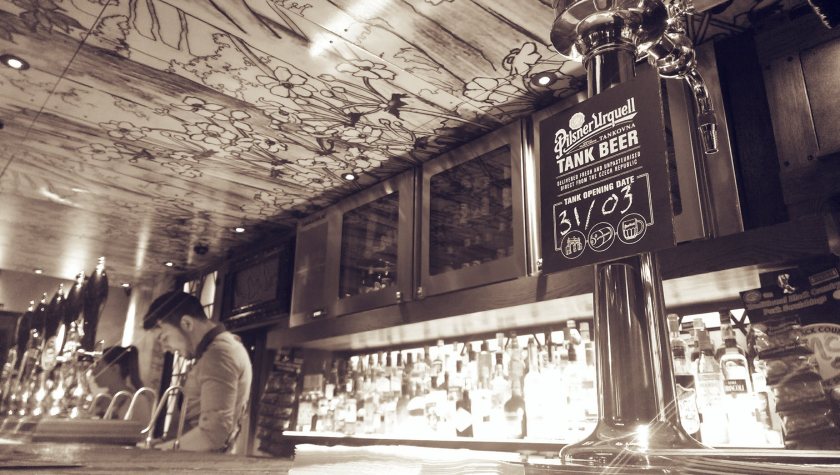
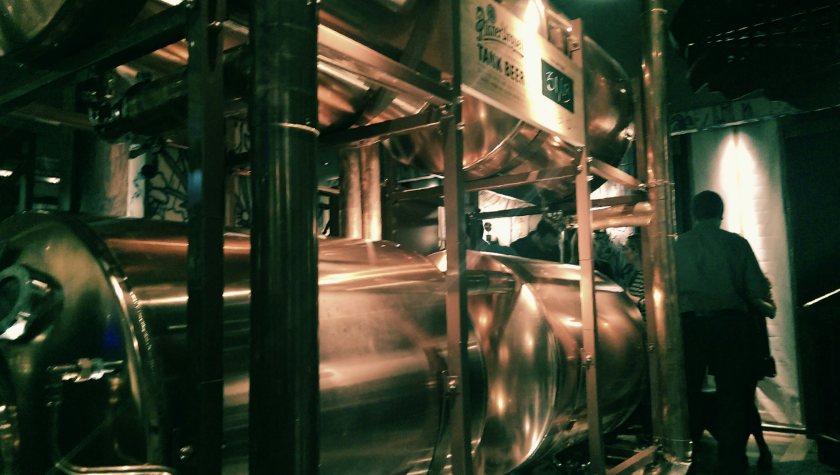
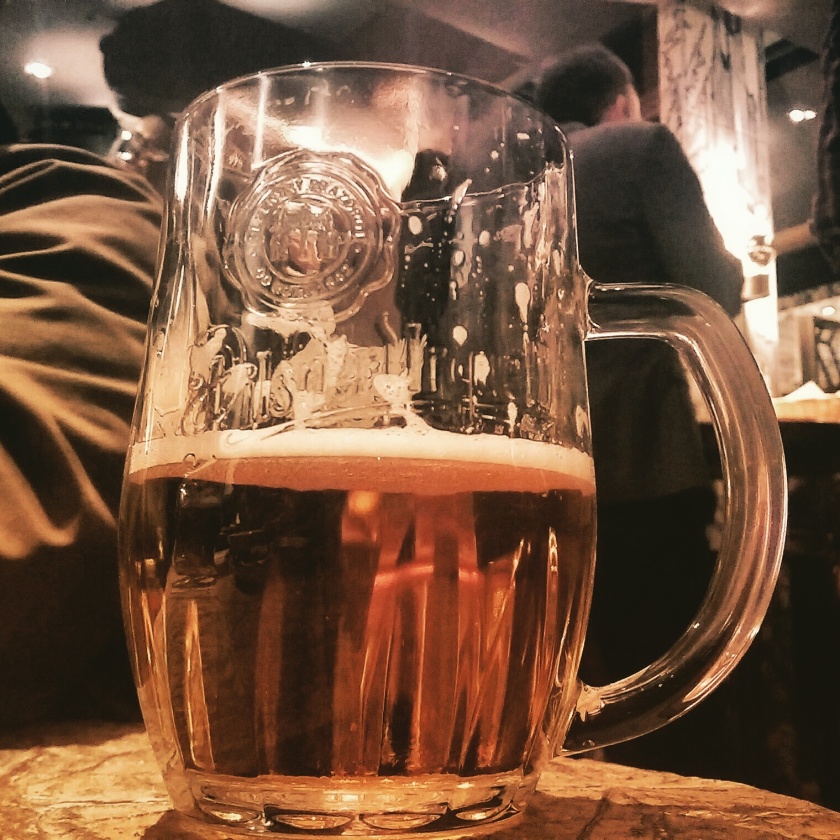
The reason I was here of course, was the beer. Pilsner were sponsoring the press launch night, so their beer was flowing freely, but the bar also has an impressive variety of other cask, keg and a (rapidly growing) list of bottled beers from the leading lights of the beer industry. Still, the star on the bar was Tankovna Pilsner Urquell, freshly delivered from Pilsen. The stacked, copper 500 litre tanks greet you like a steampunk bouncer as you enter, and beer was on top-notch form: the almost cask-ale-like mouthfeel, nourishing breadiness and spiky bitterness all present and correct. Whilst upstairs is more restaurant-like, the focus here down in the bar area is just that, the bar, and food is focused on simple Chinese dishes and snacks to match with the beers. Light, crispy batter-coated delights melted sweetly with gulps of Pilsner, like they had known each other for ages. Suddenly, elegant Chinese food and pints of Czech Pilsner felt like the most normal thing in the world, as well as something quite special.
The Duck & Rice, 90 Berwick Street, London W1F 0QB.
(English Language Grunge Flag, by Nicolas Raymond, under Creative Commons)
As the world of craft beer becomes ever more litigious, I get advice from legal experts on the risks facing UK brewers with regard to trademark and copyright law when exporting to the US.
Beer is a form of cultural currency. I first heard this concept from the lips of Garrett Oliver in his keynote speech at the European Beer Bloggers Conference in 2013, and it really affected me. Looking at the world’s best beverage through the eye of a cooly distant observing scientist reveals that it tends to go where civilisations go, and according to some, may have been crucial in encouraging the nomadic wanders of early humankind to settle and found civilisations in the first place. As beer styles and the ideas behind them have travelled across the globe, first by word-of-mouth (or chiselled Sumerian tablet), then by road, ship, rail, sky and now instantaneous communication, we live in a world of beer that is incredibly connected.
That inter-connectivity has brought with it some fantastic collaborations, but occasionally results in the equivalent of bumping into someone who is wearing the same clothes as you. Legal disputes have become the unpleasant aftertaste to the diverse flavours of craft beer’s meteoric rise, and those over intellectual property (IP) and trademark law are some of the bitterest. Whilst we all know of the more high-profile cases, it’s become a concern to me recently that the fastest-growing of the smaller brewers take their first steps into the export market could find themselves suddenly and catastrophically in costly legal trouble. Some have cottoned on to this risk, others have found out the hard way. As an example, Wild Beer Co’s Ninkasi had to be sold under a different name in the States to ensure Ninkasi Brewing wouldn’t take issue.
Of course, I’m not the only one thinking about this. Brendan Palfreyman is an attorney with Harris Beach PLLC in New York, and a major focus of his practice is representing and counselling breweries in the US and abroad on legal issues in the US, including trademark and copyright. Brendan (who you can follow on Twitter, and I recommend you do) is also an award-winning homebrewer and an Allied Member of the New York State Brewers Association. I asked him a few questions about the legal risks faced by UK brewers exporting their beer to the US.
–
What are the most crucial legal concerns that UK brewers should be aware of regarding trademark and copyright law before exporting their beers to the US?
“The critical body of intellectual property to be concerned about in this regard is trademark, not copyright. Copyright can play a role, but it’s typically not a major one in beer-related IP disputes. Copyright could come up, for example, with regard to label art/design. Trademark, on the other hand, pertains to brewery names, beer names, logos, and the like.
The most important concern is that a UK trademark will not protect a UK brewer in the US. Another issue is the potential infringement of pre-existing federally registered trademarks – the test in the US is called likelihood of confusion and it is a multi-faceted analysis.
Additionally, a pre-existing federal trademark can be used to prevent the importation of goods, including beer, at the border by US Customs and Border Patrol. This can be devastating for obvious reasons to a UK brewer seeking to export to the US.
Another key issue of which UK brewers should be aware is that the US Patent and Trademark Office has determined that beer, wine, spirits, and likely even cider are related for trademark purposes. What does this mean? If there is a preexisting US registered trademark for Ladybug for wine or vodka, it would in all likelihood prevent the registration of the trademark Ladybug for beer.”
What can UK brewers do to prevent or remedy these potential problems?
“The two most important things that can be done are proper trademark searching and federal trademark registration. Trademark searches can informally be run on Google and beer rating sites like BeerAdvocate and RateBeer.
The most important trademark search is done on TESS, or the Trademark Electronic Search System, which is the federal government site. The searches can be somewhat complicated because it’s not just exact matches that can cause problem. For example, a search for Red Road should also cover Red Street, Road Red, Rad Road, Scarlet Road, etc.
Generally, trademark filings in the US are the best protection a UK brewer can have. The brewery name is essential, and likely each of the beers that will be imported in any quantity as well.
If a UK brewer already has a UK registered mark, he or she may be able to use that as the basis for a US trademark. A UK brewer may also wish to take advantage of the Madrid Protocol, of which both the UK and the US are parties. This allows parties to file a single international application based on at least one preexisting registration, and then to use that to file individual applications in different countries.
Finally, in the US, one can file an ‘intent-to-use’ application up to 2.5 years before actually using the mark in commerce.”
Are you aware of any examples where a UK brewer has done exactly the right thing?
“Samuel Smith. They own, among other trademarks, US Reg. No. 1,341,336 for SAMUEL SMITH for beer, ale, stout, and porter. They filed this mark on August 16, 1984 and have maintained the mark in the intervening time.”
Do you expect to see a lot of high-profile legal action in this area in future?
“Absolutely, there are over 3,800 breweries in the US at present and the numbers are growing every day. This does not take into account the hundreds of breweries importing into the US. As these numbers continue to grow, trademark disputes are likely to grow as well.
Just recently there was a major and brief lawsuit between big craft beer players Sierra Nevada and Lagunitas. There was also lawsuit filed in New York recently by Canadian brewer Moosehead against a small NY brewer that makes a root beer called Moose Wizz.
Fortunately, a lot of such disputes are worked out brewer to brewer, often over a pint, and often times the brewers decide to do a collaboration beer rather than to fight it out in court.”
–
That final point Brendan makes, working things out over a pint or collaboration brew, is really the attitude that needs to be encouraged over defensively or offensively ‘lawyering up’. Whilst that hasn’t always been the case in disputes here in the UK, it’s reassuring to know that legal experts here take a broadly similar view. Nicholas Mitchell is a solicitor at White & Black Legal, and recently wrote an article for the firm on beer-naming disputes that have flared up over here. The key message is be conscientious, practical and reasonable, as demonstrated in the following:
In an industry where over a thousand breweries are regularly launching new beers, without always taking advice, there will always be accidental conflicts over names. However, such issues can be resolved in a reasonably civilised manner and without adverse publicity, for example when Thornbridge Brewery agreed to alter the name of their black IPA “Raven” to “Wild Raven” following a request from The Orkney Brewery, which brews a bitter called “Raven Ale”.
As Nicholas points out, “in an industry so dependent on social media, it is advisable to approach naming disputes in a way that does not leave a bitter taste in the mouth of consumers.”
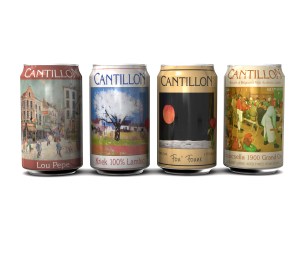
The future? Designs for Cantillon’s new packaging.
It’s still sinking in, to be honest with you.
The first time I visited Cantillon nearly two years ago, it was breathtaking. It was everything people said it would be, and more, because there is a level of sensory interaction with the place beyond smell, sight and sound that is hard to put into words. And that’s before you taste the beers themselves. All of them, including the fresh and utterly mystifying lambic, were incredible. Incredible because they provided new flavour experiences but also left questions. What is that flavour? What does this remind me of? Is this still even beer?
Like the best pieces of art, so much of what is great about Cantillon is unspoken; undeclared; nuanced and yet, vibrant. Jean Van Roy presides over one of the most highly-regarded breweries in the world. Why then, would Cantillon need to do anything differently? Why would Van Roy, one of the world’s most respected brewers and an undeniable master of his craft, need to change processes there?
“America” must surely be the simple answer. Bottles of Cantillon’s beers do not travel very far, and with a massive (and growing) population of drinkers interested in craft beer and unique, sour styles, the homegrown varieties are no longer enough. The lucrative export market, denied to Cantillon for so many years, is now finally within reach.
When I received the email yesterday from a slightly nervous man from the “Ni-san” PR agency, wondering if I could look at some proofs of designs sent to him by his client, a ‘very known Belgium brewery’, I had concerns. He seemed reluctant to show me any images without me agreeing to ‘consult’ on them. I said fine, I’ll help however I can, and the next email I received astonished me.
Cans. From Cantillon. The man had found my blog posts about craft beer in cans and thought I was a good sounding board for what would prove to be the early designs for Cantillon’s new canned beers.
I couldn’t believe my eyes. Immediately my mind ran away with itself, picturing slabs of Fou’foune in my fridge, but no offer of samples was forthcoming. Indeed, the entire thing was over as suddenly as it began. A subsequent email just twenty minutes later begged me to delete the previous one with the images attached, said there was no longer ‘obligation for services’ and that I should act as though the entire thing had never happened.
How could I? Especially since, unknowingly, the PR had left the text from a previous email exchange in the footer, namely the text “NO DO NOT SHOW THESE IMAGES THIS IS EMBARGO UNTIL 1/4 12PM – J”








 Chris Hall | Beer