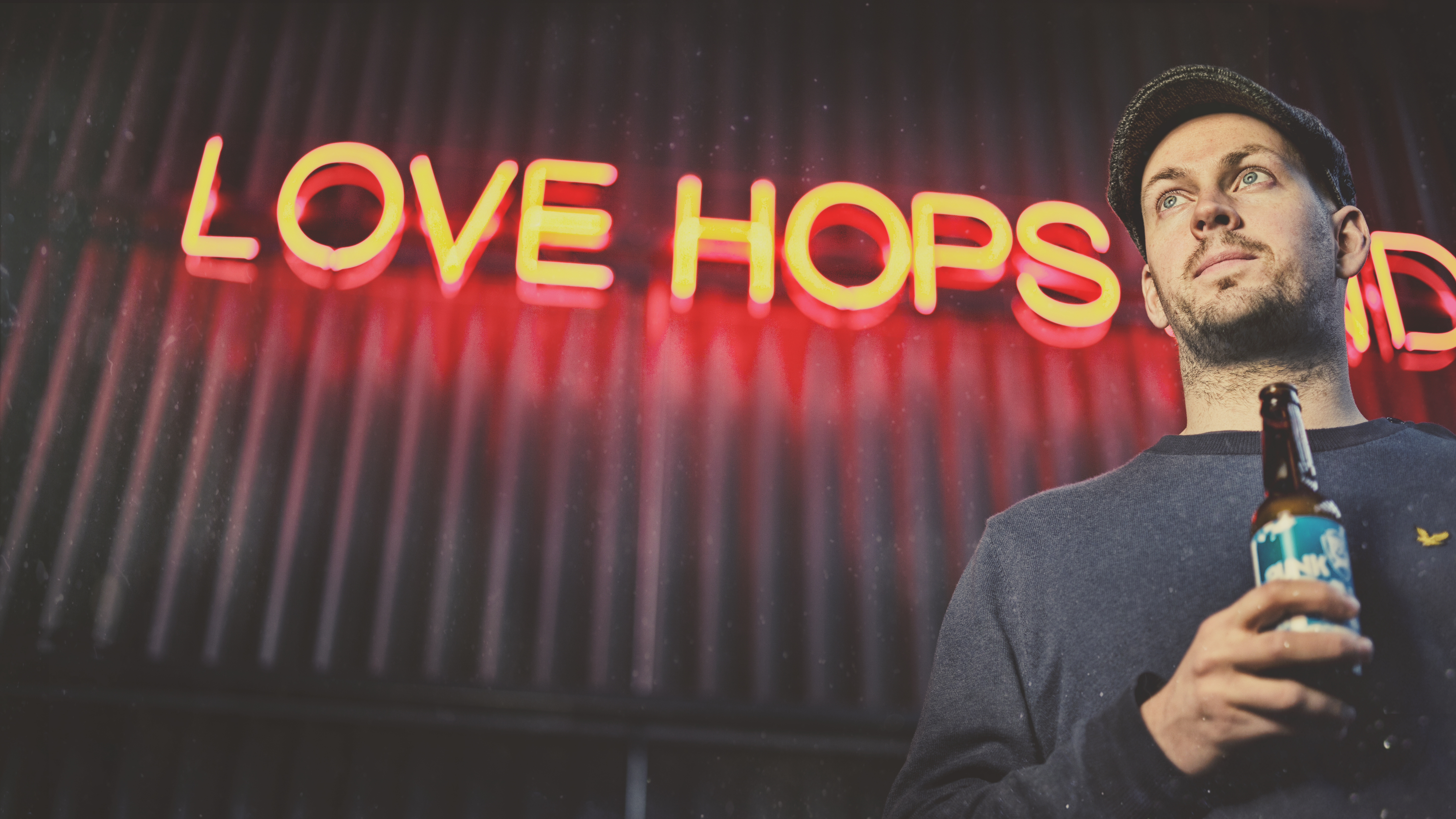
Interview with BrewDog’s James Watt

James Watt is the co-founder of BrewDog


I and some other beer writers were recently invited to BrewDog’s Ellon plant, where we took a tour of the ever-growing new brewery and new onsite bar DogTap, and were treated to a wonderful beer and food dinner at Musa in Aberdeen. In a conscious effort to avoid the inevitable ‘what I did on holiday’ blog post, ahead of the trip I asked various Beer People I know what they would ask BrewDog if they had the same chance as me. A lot of people feel very strongly about BrewDog, one way or another, and it seemed only fair that I extend the opportunity to others who weren’t on the trip. There were some recurring topics, and not every question made it into the interview due to time constraints, but I think there’s some fresh insight here, as well as clarification of issues that may not have been fully explained in the past. What follows is a series of questions put to James Watt on Friday 22 August, some from me, some from other people. Thanks again to James, Martin Dickie, Sarah Warman and Stewart Bowman at BrewDog for their hospitality and time.


Some people are concerned about the impact you’ll have on independent bottle shops (such as Stirchley Wines in Birmingham and BeerRitz in Leeds) by opening new BottleDogs nearby. Are these new BottleDogs necessary when you already have bars with off-sales licenses in Birmingham and Leeds?

Opening BottleDogs [in Glasgow, Leeds and Birmingham this year] should actually benefit the beer scenes there, increasing the availability, the appreciation and the understanding of good beer, whether that’s people opening new bottle shops or new bars. We’re all collectively against the macro, generic beers and nonsense in people’s heads about what beer can be. Our other bars and BottleDogs that we’ve opened have shown that we can actually contribute to the scene.


With regard to the BrewDog Development Fund, what is your long term plan and reasoning for investing in new breweries like Brew by Numbers? There was, and remains, confusion over the equity stake you took in BBNo and CAP. What are you gaining from these investments?

We’re gaining next to nothing. It’s all about helping other people get started in making beer and improving the availability of good beer. As well as cash investment, we’re helping Brew By Numbers out by giving them some old tanks we had at Fraserburgh, helping their beer get into export markets and we’re showcasing their beers at our bars. With CAP we’ve done similar things.

In both arrangements it’s a minority stake. We’ve got no influence, no control and no intention to have any of those things. In both arrangements, there’s clauses written in so that they can buy stock back if they want to. We’d never want to have a controlling stake in anyone else at all. It’s just about helping other people get going. We started our business on a shoestring in 2007, and we wanted to make it easier for other people, like CAP and Brew By Numbers, to start their business. We wanted to pass on the benefits of what we’ve learned since we set up. We’ve got no other motive whatsoever, than just helping to increase the appreciation of good beer.


There’s been talk of your next bar opening in Islington in London. What would you say to people who think there are already plenty of bars in London, especially given how close the proposed Islington site is to Camden and Shoreditch? Are you maintaining a focus on London, or elsewhere now?

We have a focus on everywhere, so we’re continuing to look at places in London, we’re also looking at loads of places outside London, places on the edge of London. We want to open more bars. We love what our bars do. We love the enthusiasm and passion of the staff there, and we have plans to open more this year.

[James later admitted that the new Islington bar will be a bit different – so stay tuned for updates on that]


A few people wanted to know if you would ever consider either a) brewing cask beer exclusively for the US market, where for many there it’s seen as being as ‘craft’ as it gets; or b) setting up a side concern/brand/brewery in the UK that brews just for cask for people that like it?

In terms of brewing cask beer for the US: never. With cask beer it’s so much about the conditioning, it’s so much about how it’s handled. If you put that in a shipping container, it won’t show up for eight weeks. There’s no way at all that we’d brew beer that wouldn’t be in the best condition for consumers.

But, given that you’ve got plans, or at least the inclination to start brewing in the US at some point, would it be something that you would consider then?

Probably not. In terms of brewing for cask in the UK, I love cask and it still has its place. I think cask beer is fantastic for showcasing indigenous UK styles: milds, bitters, ESBs, which are all phenomenal on cask. They’re lower in alcohol, lighter in body, and cask dispense gives them that body.

With the type of beers that we make, we think the best way to dispense those hop-forward beers is keg. We think on cask they would be too cloying and too sticky, and we feel the best way for consumers to experience beers like Punk IPA is keg dispense.


The craft beer landscape of the UK is very different now to when you started BrewDog. With self-proclaimed ‘craft beers’, including your own, finding their way into Wetherspoons, Greene King’s pub estate etc, has craft beer really become mainstream? Would you ever draw a line on where your beers are going to be sold?

Well, 1 in every 2,700 beers sold in the UK is a BrewDog beer. Let’s have the conversation about craft becoming mainstream when it’s 1 in every 200 or 300. And we’ve never been elitist when it comes to where our beers are sold. We’ll happily sell our beers to Tesco, we’ll happily sell our beers to Wetherspoon. We want to help revive the UK good beer market and make people as passionate about great craft beer as we are, we want to increase the availability of great beer, and we can’t do that by being snobby about it. If they’re happy to sell our product we’re happy to sell it to them. When you’re on the inside of the craft beer industry, it’s difficult to have that perspective to see just how small it really is. When you just drink craft beer in craft beer bars, you feel like it’s everywhere, but it’s not.


Some people have concerns about pricing, and want to know why you charge a premium price for your own product in your own bars. An example given was that in Shoreditch, Jackhammer is £4.90 for two thirds. At another bar nearby, an American import of similar strength is £4.50 for two thirds. Some think you are making dramatically increased margin on your own product in your own bars.

Well, I’m pretty sure that the beer they’re referencing is Lagunitas IPA. Lagunitas are huge compared to us, they’ve got two production facilities, both of which are about ten times the size of this one [in Ellon]. They make phenomenal beer but in terms of our size versus Lagunitas and others in the US, we’re behind by such a long way. They can produce beer for so much cheaper than we can.

Our margins are pretty tight. Making our beer is just super expensive. In one 400HL tank of Jackhammer, we’re putting in half a tonne of dry hops, which also means we’re losing 25% of the beer, so our yield is only 75%.

So how much money is that, that you’re basically throwing away in order to make a hoppier beer?

So a 400hl tank of Jackhammer has a total sales price of about £50,000, so 25% of that every time we brew a tank of it [£12,500], just to dry hop it as much as we want to. Plus you’ve got the cost of the hops, plus the fact you’ve added 2 weeks to the process time, so how we make our beer is just super expensive.

We’re a public company, people can look at our accounts. We make a small amount of money but we don’t make a lot of money. We’ve always been about just making enough money so that we can invest in our systems, our team and our people, to make great craft beer. We’ve never taken a dividend and we have no intention to. So our pricing is what is fair so we can continue to make the beers we make. Lagunitas can make hoppy beers cheaper than anyone else, and good luck to them. But if you’re comparing us to them, you’re not comparing apples to apples because they’re so many more times the size of us that it’s not a fair comparison.


On the subject of getting bigger and making beer cheaper, with many small and successful craft breweries like Beavertown and Fourpure expanding, they’ve been able to produce a higher volume of beer at a reduced cost and pass this on to the customer. Would you look to do the same thing with your own canned beers next year?

No. We sell our beer at as fair a price we can. What a lot of consumers don’t understand is how the duty structure in the UK beer market works. At the moment, because we’re exporting and because we’re now at this size, we pay full duty. So we pay the same amount of duty that Heineken and Stella and Carling pay. The smaller guys that you mentioned, under this system, which is perfect for the smaller guys starting out, they pay half the duty rate we do. Which means, under that system, they can potentially sell their beers cheaper than we are. When they grow to the scale that we are, which I’m sure they will, they’ll also have that issue.

For a bottle or can of Jackhammer we would pay HMRC about 50 pence, whereas those guys will be paying HMRC in the region of 25 pence. And if you consider that’s at the point of making it, once you’ve added on distribution and everything else, that’s where the pricing differs. I wish it wasn’t the case, but it’s just how the UK beer market is in terms of beer duty, so we make the margins we need to help grow the company and invest in our people, that’s all.


One of the things almost everyone agrees on is that you have fantastic customer service, and some of the best-trained staff in the industry. Have you ever thought of building a business around staff training? With increasing numbers of craft beer bars, surely there’s a market for people wanting the best training in the business.

Our team is perhaps the thing I’m most proud of, in terms of what we’ve done as a company. They’re passionate, evangelical, knowledgeable, a lot of them are Cicerone-qualified. Because what we do is so niche, teaching people to taste what’s different, we’re not just selling beer, we’re selling education and information.

We haven’t thought about creating a business about providing that training, and it’s probably not something that we would do. We just want to focus on the personal development of our own team, being the best company to work for that we can be, and just making sure that everything goes into making the best beer.


Finally, what’s your favourite soft drink?

[laughs] That’s a good question. It would be a homemade thing I do myself, that’s apple juice infused with elderflower and tiny bit of chili, and a type of peas that turn into icicles, in a punch.

Well, um, that’s pretty… craft. There was talk some time ago about you going into making soft drinks. What ever happened to that?

It’s still something that we would like to do, and to have in our bars. We think there’s definitely a market in the UK for more artisanal soft drinks, and it’s one of th0se things that’s on a massive list of projects, things that we’d love to do, but we just don’t have the time. We’re just so busy trying to keep up with demand for what we’re doing right now.

If you could make any soft drink, would you make that one that you just described, on a scale so that people could buy it anywhere?

I think if we did so a soft drinks line we’d want to take advantage of the produce that we have locally in Scotland. We’ve got phenomenal soft fruits and berries locally, so we might want to do something that takes advantage of that.

Thanks very much for your time.

————

(Thanks to Matt Curtis, Adam Driver, Matt Lane, Ed RazzallNate Southwood and Emma Victory for their suggestions for questions.)

[EDIT 1/9/2014: Amended “Well, 1 in every 2,700 beers sold in the UK is a craft beer” to “Well, 1 in every 2,700 beers sold in the UK is a BrewDog beer”.

Disclosure: Aside from being a freeloading craft wanker beer writer, I am also an Equity for Punks shareholder and was given beer, good beer too, and food and taxis and kind words and doors held open for me for absolutely free as part of the trip to BrewDog. Judge me as you will, but all these words are true.

The Beer City

‘Bird’s eye view of London’ by Chung86, from Flickr, under Creative Commons.


If you built a city of beer, what would be the foundation? A history, surely; or a reputation perhaps, one lost but now regained.

Solidify that historic, ambitious miasma with the labour of human beings, captains of industry, greedy tyrants, honest souls and bind with the thirsty salt of the earth that build empires then pop down the local.

What shape should this city be? A tower to the moon of pure, unfettered ambition, or a wide, broad, shallow and inclusive plain that absorbs every drop. Perhaps both: a free space where ideas germinate and grow, defended by rigid and steady accomplishments.

It sounds like a fine and noble place, but it isn’t the city that London beer has built. What we have is a hot mess of ideas, ideologies, methods and clans. A furious diaspora of beer styles, none of which have ever been agreed upon, spreading quickly and drunk thirstily by an audience with no upper threshold for things new and/or good.

The whole thing isn’t really a city at all. It’s a river, forging its own boundaries with an endless tide of occasionally directionless but utterly unstoppable enthusiasm.

London’s beer river courses, much like its real-world counterpart, in wide oxbows and sharp bends, towards one favoured new style, brand, bar, pub, or another, looking from above more like a seismograph of some earth-shattering event. In some ways, it is.

It’s into this whirling, unforgiving torrent that the plucky yeast of London Beer City was pitched, an ambitious strain combining the very best of UK beer into something almost magic, or at the very least difficult to comprehend. Just how could they all work together, or alongside each other, and slake the thirst of thousands?

London Beer City had many different events, but also so many different types of events, catering for the longest or shortest of attention spans, the shallowest of pockets, and the thirstiest of palates. Now it’s over, and we’ve all tried to assemble the beer-sodden notes, smashed festival glass fragments and pork scratching crumbs into some kind of identifiable map of what it was, and whether it really worked.

Well, there’s no question that it worked. What was tapped at the beginning of London Beer City was not some terrifying, million-pint vat of beer, but rather London’s thirst for beer of all kinds in all kinds of places. We sustained that thirst for nine days, and I dare say next year it could last for fourteen, or even more. The real questions are: where is the river taking us next, and how will we persuade people not to cross it, but to sail on it with us?

London Beer City

London Beer City


About damn time.

That seemed to be the overall consensus when London Beer City was announced. At last, some truly city-wide recognition and celebration of just how incredible the London beer scene is right now. That’s the best thing about it too: that immediate sense of right now, the vibrancy and bottle-able excitement.

Craft beer in London is about the pursuit of something special that we can enjoy and share with others. The best bars, pubs and breweries in the capital, the places and people that really embody that idea, are all involved a calendar-busting programme of events taking place across London. I’ve written before about how that pursuit, the seeking, is what motivates me. London Beer City seems packed with opportunities to do just that: seek, find and taste incredible beer in a huge variety of places.

This event, hopefully the first of many annual occurrences, is the culmination of a huge amount of work by 2013’s Beer Writer of the Year Will Hawkes, who has managed to co-ordinate a schedule that captures the very best of what London beer can be, whether it’s historic, traditional, trend-setting or esoteric. “I want London Beer City to be an annual focal point, something Londoners look forward to. A relaxed, fun occasion, with events for all tastes and pockets. I hope London Beer City can show off the best of beer,” says Will, “and also help bring about world peace!”

A noble aim. Of course, corralling a city of seventy breweries (and rising) and dozens of quality venues was no easy task. “There are a few really tough things,” Will explains, “such as: ensuring you have enough events every day (I just about achieved that); getting a good spread of events; making sure everyone understands what the week is about; and collating the information quickly and accurately. Overall, though, it has been quite smooth since so many of London’s breweries, pubs and bars are keen to be involved. The London Brewer’s Alliance has been really helpful.”

So what is Will looking forward most next week? “It’s difficult to say! Siren’s live brew at the Earl of Essex, Pete Brown’s Music and Beer matching at The King’s Arms (it’s also on at the Bull in Highgate), Brodie’s sour tap takeover, anything Camden Town are doing … there’s loads of stuff. I’m hoping to get to two or three things each day and still retain a functioning liver come Sunday evening.”

Most people I know have similar concerns. How can we hope to fit in so many incredible events, especially those of us with day jobs? I think the key to enjoying a week of events like this is to pick a few things to definitely attend, and then just throw yourself into something new and different every day. There’s obviously the Great British Beer Festival and the London Craft Beer Festival to consider, too. New events are being added all the time, so it might pay to have some time free for something unmissable and just-announced.
Many events are free to attend, and ticketed tastings, festivals and dinners offer some irresistible opportunities to meet amazing brewers and try some wonderful beers and food. I’m hoping to see London’s beer community embrace this exciting week of events in the way the city got drunk with excitement and pride during the Olympics. Only this time, in a slightly more literal sense, too. Here are some of my own highlights from the schedule:
  • Porters, Peers and Pilgrims: a London brewery heritage walk – I’m gutted that I won’t be able to make this, but this looks fantastic if you’re interested in learning more about London’s brewing history at street level. Des De Moor is the guide for this tour of historical brewing locations across the City and East End.
  • Beavertown Welcomes Rough Trade – Beavertown’s tap room is fast becoming the city’s best new beer destination/all-day hangout, and this day of music provided by DJs from Rough Trade, beer from Beavertown’s tap room and some bangin’ street food looks like a fantastic way to spend an afternoon.
  • Weird Beard Pop-up bar in Bermondsey – In a move that surely out-crafts even the craftest of crafty craft brewers in Bermondsey, the suspiciously good Weird Beard will be opening a pop-up bar on the Beer Mile for one Saturday only. Because the one thing the Beer Mile needs, is more beer.
  • Tasting Beer with Melissa Cole – You’d have to be crazy to pass on a tutored tasting from a beer expert with Melissa Cole’s knowledge, and this tasting just happens to be in one of the city’s best bars, BrewDog Shepherd’s Bush. What’s not to like?
  • One Hells of A Beaver – A collaboration between Beavertown and Camden Town Brewery is a thing to be celebrated in its own right, but as it’s going to be a mash-up of Camden Hells and Gamma Ray, it might also result in the Beer of The Summer. If that wasn’t ‘craft’ enough for you, on the brewday at Camden there will also be a collab-label art-off between Camden and Beavertown’s creative types.

Some people think that London’s beer scene is already disproportionately over-sized, that the scene is nothing more than one more bubble that pops in the head of a pint of cheap, dirty lager. The fact is, it’s about goddamn time that we have something of this scale. The revolution is over. It’s time to start taking this shit seriously if we want it to last. If you think London’s ‘beer ego’ is already so big it can be seen from space, then I’ve got bad news for you. We’re only just getting started.

UPDATE: Golden Posts 2014

(‘Beer cans’ by Michelle Tribe, from Flickr, under Creative Commons)

You may or may not remember a post I wrote back in *adjusts spectacles, squints at screen* February, in which I proposed an end-of-year celebration of the best beer blogs and blogposts, The Golden Posts, in a similar fashion to The Golden Pints.

Whilst we all generally get along and say “good post!” and argue in each others’ comments feeds, there’s not that much actual feedback in the blogoshire, or indeed any formal celebration of particular blog posts. Bloggers can submit their work to the annual awards held by the British Guild of Beer Writers (whether they are members of the Guild or not), but I don’t think that this (currently) adequately caters for the diversity of beer blogging, or indeed the sheer number of us.

The other reason I want to do the Golden Posts this year is because I’m really interested in what everyone’s personal tastes are when it comes to beer blogs, and whether, year-on-year, any identifiable trends emerge. Each tired sigh from the crypt of “is beer blogging dead?” (accompanied by the rattling of chains, creaking of doors and so on) suggests to me a suffocating, numbing ignorance of just how many great beer blogs are out there, so I hope The Golden Posts could help people find new, great blogs.

My suggestions for categories were: Best History Post, Best Impassioned Rant, Best Pub Post, Best Palate Post, Best Beer Travel Post, Funniest Post and an Open Category.

Initial feedback was positive, though there were several requests for a video category. I’ve thought about this a bit and decided that whilst there’s a lot more video bloggers these days, I’m not sure there are really enough to compete against each other on a level playing field. Most are trying to be different to each other, or are hard to compare directly.

However, there are several that are still more than worthy of praise, so I’ve decided to make the Open Category even more open: it can now be ANYTHING posted online about beer that you think is worthy of everyone’s attention and praise. Abstract blog posts that don’t fit in the other categories, tweets, Vines and indeed videos of any kind. If loads of people pick different videos, I’ll take that as evidence to include a video category next time, or something.

I’ve also adjusted the descriptions and names of a couple. Impassioned Rant could also be a professionally written Op-Ed sort of piece that firmly nails the author’s colours to the mast on a specific issue, and the Best Palate Post can also be one that shows off some beer and food skills whether in recipe/pairing/description etc.

So, the Final Categories are:

  • Best History Post (a post that covers, explains, or unveils a fascinating bit of beer or pub-related history)
  • Best Impassioned Rant/Op-Ed (a post that has JUST ABOUT *HAD IT* with a particular issue, but makes some damn good points too)
  • Best Pub Post (a post that shines a light onto a particular pub, and makes us want to be there with the author)
  • Best Palate Post (a post that showcases the dazzling, laser-accurate palate of a gifted taster and bring the description of a beer or beers to life. This might also be a post that demonstrates a masterful food and beer pairing/recipe)
  • Best Beer Travel Post (a post that really takes you somewhere and gets well-refreshed/rowdy/locked up in a foreign jail to boot)
  • Funniest Post (a post that… *giggle*…I mean, the way it… it… *guffaws*… it’s just absolutely *sobs, falls off chair*)
  • Open Category (anything posted online about beer that impressed you – whether it’s a video, tweet, Vine or photo, or a beer blog post that inspired you, amazed you, had great photos, personal significance or otherwise is deserving of praise but doesn’t fit in any other category)

One winner per category, please, but feel free to note any honourable mentions/runners-up. Most importantly, tell us why that post is a winner, and what the blogger in question did right. Tell the world about your Golden Posts in a blog post around the end of the year, or by tweet/Facebook/series of Vines stitched together, and I’ll do some kind of round-up. Hashtag your tweets #GoldenPosts and/or send an email with a link to cshallwriter[at]gmail[dot]com.

But wait! some of you cry, I want to take part in the Golden Posts but I:

  1. didn’t know you’d suggested doing so;
  2. can’t think of any posts to give awards to; and/or
  3. saw you say something about this but totally forgot.

No problem. I’ve thought of some prompts to help you remember posts you might have particularly enjoyed this year to get you rolling. Make some notes on them, use apps like Pocket etc., or perhaps start a draft blog post now that you add to as the year goes on. Here are some little prompts:

  • What beer festivals/beer launches/dinners/tasting events have you been to this year, or really enjoyed reading about?
  • Which are your favourite blogs to read, and why?
  • Have you bought any books by beer writers this year, and do you like their blogs?
  • Did you read a blog this year that inspired you to write something yourself?
  • Did you read a blog this year that convinced you to try a new beer, or revisit one you don’t like?
  • Have you planned to go on a beery holiday or trip somewhere because of a great blog post you read?
  • Did you start following someone on Twitter/Facebook etc. on the strength of a post you read?

I hope those help. I’ll be doing my Golden Posts at some point in December, and I’ll try to remind everyone again closer to the time. I’m really looking forward to seeing what people pick this year, and thanks in advance to everyone who wants to participate. Cheers!


UPDATE (20/11/14): I’m planning to post my #GoldenPosts blog in the first week of December. Feel free to join me in the opening week, or wait and have a read to get the idea before taking the plunge.