The Week in Beer #0

IMG_20140306_210326

Sometimes, it’s hard to generate a whole blog post from the various flotsam and jetsam of beer things that happen. It’s not always enough – not so much a writer’s block as a blogger’s clog – a little cluster of thoughts that lack the electric impulse to become Something To Say. Still, I think that beer is always worthy of note, even if, or especially if, it’s mediocre. This is me having a stab at capturing the stray craft particles, the free radicals of my week, wrapping a big net around them putting a flag in the whole hoppy mess. Here are some beers I’ve had this week and what, if anything, they made me think.

Monday: Dry as a bone, but there was much to be said on Twitter about anger and reactions and beer styles and so on. Another Monday.

Tuesday: I was conveyed unto the Brewed Dog on the Shepherd’s Bush to meet and rejoice with the craft wanker brethren (and sistren). A tasty insult to history was enjoyed in the form of Gloucester Black Simcoe. Also of note: a Rye Bread Sour from Levain Franken that had a quaffable creamy note that made it one of those expensive beers you would drink by the pint with a winning lottery ticket. Also, my curiosity got the better of me, and I tried Hobo Pop, which proves we can now make American Stale Ale as good as them Americans and that. Hobo Plop, more like.

I then proceeded to drink an Amount of Beers Inappopriate for a Tuesday, but stuck to halves and two-thirds and so survived largely unscathed.
IMG_20140305_232853 (1)

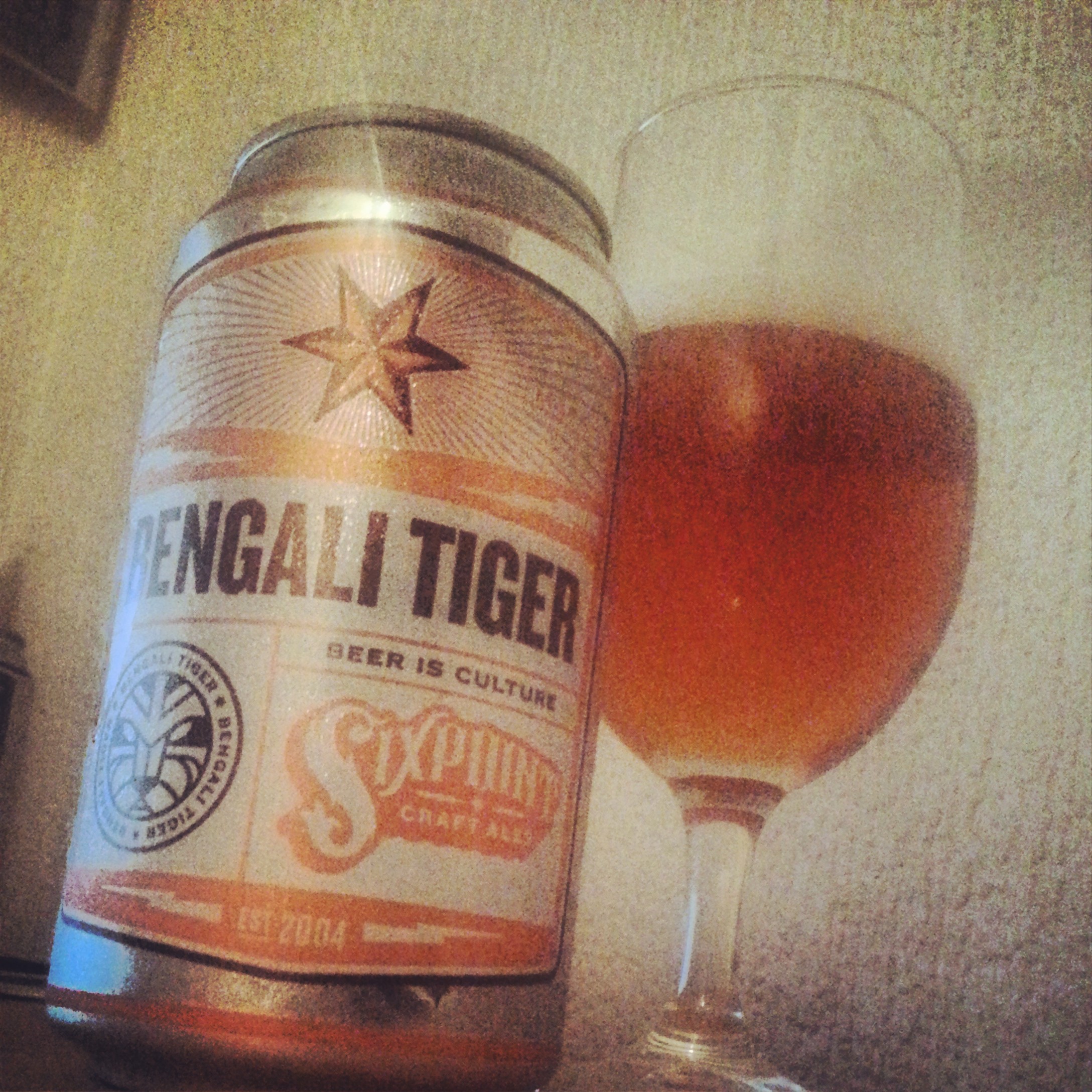
Wednesday: Sixpoint’s cans of Wetherjoy arrived late due to inclement posting attempts. Others posted about them quicker than I, so I didn’t bother to add to the noise. My thoughts on the beers:

The Crisp – slightly too boozy, but largely by the book pils. weird pithiness throughout that gives a sense of Premiumness, but at what cost?

Sweet Action – a fresh, foxy delight of peach, mango and melon. Delightful and juicy. Likely to be cloying in larger amounts, but that exact portion felt heavenly.

Bengali Tiger – an orange pith heavy, grapefruit tart assault on my main face. Refreshingly uncrystally, robust yet accessible.

What does it all mean? Don’t know. Too tired of predicting the future. More interested in the choice of range: for example, why a lager, wheat/pale/cream pale and IPA? Imported European-style US lager in perfect condition to prove a point? Maybe. More likely to be the entry point to all this craft bollocks for your mate who’s with you when you order the pair for £5/6 deal. Hook him in, get him on the Sweet Action, job’s a good’un.

Thursday: BeerBods this week was Moncada Notting Hill Red, an accomplished, American-hopped red ale at 6%. Having had a couple of the brewery’s beers before (Ruby Rye on cask and Blonde in bottle), I was expecting good things, and the Red did not disappoint. Full in jammy and piney aroma, rounded in its nutty sweetness and caramel-soaked orangey, limey hop character, there was a lot to enjoy in this beer. I’ll pursue their other beers with interest.

(Given the thirst for something similar, I opened a bottle of Hardknott Infra Red, only to find it had gone a bit ‘craft’, with a lactic character reminiscent of Rodenbach and much of the hop character and toffee sweetness gone. Not wholly unpleasant, but not the beer on the label. So why did I keep drinking it? It had gone off – I should have immediately poured it away. Truth is, I actually liked what had gone wrong. Truly.)
IMG_20140307_185233

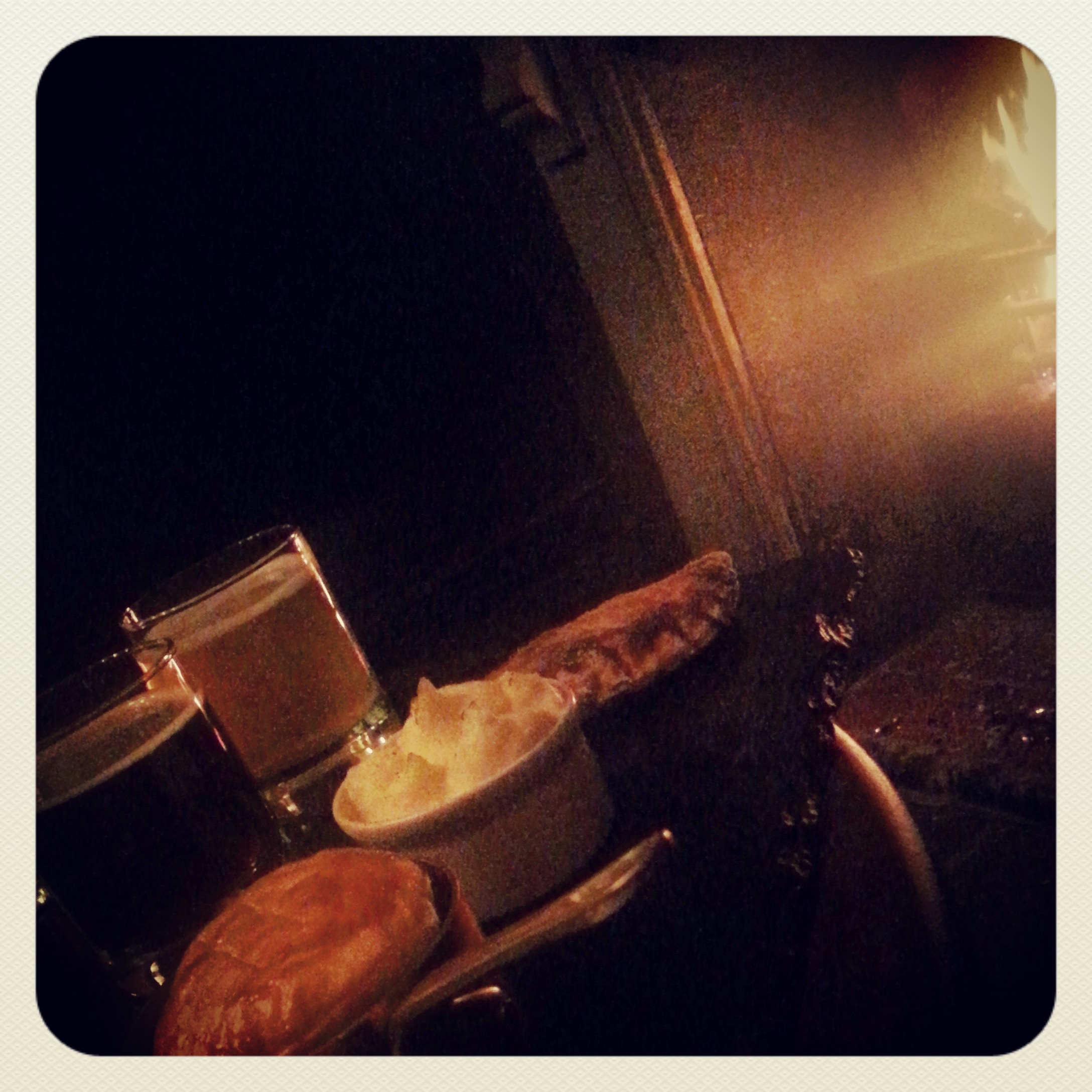
Friday: The Gun in the docklands near Canary Wharf celebrated National Pie Week (no, not every week apparently) by offering a Pie and Beer Flight, which was about as close as it gets to my ideal use of a 6 x 12 inch piece of slate. Three mini-pies, each paired to a third of beer. Cockel and smoked fish pie matched to a third of Anspach and Hobday’s The Smoked Brown (a sweet, crispy and smokey boost to the pie); a venison and apple pie matched to Partizan Black IPA (total, lavish decadence); and a figgy fruit turnover-pie with Brew By Numbers Saison Wai-Iti and Lemon (a curiously warming and spicy combination). For £14, it’s achievable and enjoyable proof of thoughtful beer and food matching without being inaccessible or too geeky. Hopefully more to come from this increasingly impressive pub.

On a side note, it was here that I first saw Brewmeister in the wild: their Supersonic IPA was on cask. As I can no longer get away with chiding them without actually tasting their beer, I dutifully ordered a half. Would it be passable? Would it be great? Would it have travelled well, and would a clone of Punk IPA on cask actually be a bad thing? I never found out. Some bastards had drank it all. Ominous. I went for Siren Soundwave instead, of which there was plenty.

That’s all for now. Saturday and Sunday will be spent in York and Leeds, hopefully warranting a gushing blogpost in due course.

Hipsters

Embracing tradition - or killing it?
A skull dimpled beer mug in Drink Shop Do near Kings Cross. A stylish, trendy appropriation of a traditional object. Does it offend you, yeah?

This is my belated piece for the #beerylongreads March 1 edition encouraged by @BoakandBailey.

The C word – craft, to be clear – is seen as one of the most divisive in the modern beer scene. The reasons for the arguments, and the arguments themselves, are complex and often tedious. It’s now easier to find things we disagree about, than issues we actually agree on. I’m convinced that much of this has to do with language, and the way that it, like a living thing, evolves without us noticing. Terms that were useful shorthand for a broad idea become labels, even terms of derision. When they do, it can become a source of alienation that prohibits understanding and acceptance.

In that sense, hipster is far more controversial than craftHipster has gone from being applied to a kind of trend-setting, trailblazing, early-adopting, fashion-creating subculture, to a far more mainstream, trend-following herd. It has become useful as a broad label for individuals and groups alike, people on the edge of cultural behaviour that, for better or worse, puts them amongst the craft beer scene.

For a long time, I’ve used the word affectionately, referring to hipsters in the same way I might say ‘Oh Morrissey, you silly Quorn sausage.’ I see people doing things that seem naive or gullible, fashion-following or amusingly trendy, and I think, somewhat patronisingly, oh, hipsters, shaking my head in fatherly amusement/disapproval. In the past year or so though, I have become increasingly aware and sensitive to the use of the word hipster in a decidedly non-affectionate way.

‘Fucking Hipsters driving up the price.’

‘It’s just for hipsters, more money than sense.’

‘Typical bloody hipsters, do whatever they’re told.’

I’m not going to give you a history of hipsters, but let’s all take it as read that they haven’t just appeared out of nowhere, and that trend-setters and early-adopters or whatever have probably existed since an early example of proto-human first added a dashing set of beads to his hairy brow. Yet, we talk about hipsters now like some kind of active, malevolent force. Tortoiseshell-rimmed-bespectacled Hell’s Angels roving through our cities, installing street food vans, vintage markets and Hopinators in their wake. A recent article about the ‘Shoreditchification’ of urban areas bordered on Daily-Mail-like scaremongering about a place near you suddenly getting gentrified (how ghastly). Who are these hipsters? What do they want? Have they come to destroy our way of life?

Nowadays, I rarely hear hipster used in any other way than derogatively. It’s a form of casual discrimination that is being increasingly used by people about those who are either just younger than them or dress differently to them. This use of the word hipster has potential to damage the British beer scene in the long term.

But they’re so phony, and annoying, and pack out places I like, and I liked that thing first, and they drive up the prices of things.

If hipsters pay more for something, at least they’re doing so because they believe (regardless of whether they understand) that the thing they are paying for is good. It’s the people making the product and selling the product who set the price. The taxman has a say, but so far the Treasury hasn’t introduced a tax on being a hipster (stop giving them ideas, Chris).

We all know what hipsters look like though, right? They’re youngish people, making a fuss about a format of something on the verge of obsolescence, claiming they appreciate it more than the mainstream, who don’t understand. They’re such total, obsessive wankers about it, they usually apply a special term, or want a special ‘definition’ for the thing they like, so that everybody will know what it is, and it can’t be mistaken for anything else. I’m of course talking about proper, authentic, dyed-in-the-wool craft wankers. The kind of wankers that, one day, decide that they should form a campaign to revitalise ale.

Classic craft wankers, right? So, by that reasoning, CAMRA was founded by hipsters, yeah?

“No, no, no, I like ‘real ale’. You probably haven’t heard of it, you probably like Watney’s.”

You might think that comparing the newer breed of craft wanker with the old breed of real ale wanker is a tired comparison. I say that it isn’t, because we clearly don’t realise just how relevant it is. As an example, take a look at the recent findings of Boak and Bailey on hipsters driving up prices:

No, no, no. We all know that hipsters were invented in Shoreditch in the noughties. Nobody ever did something just because they thought it was cool before then. No way.

We’ve lazily fallen into the trap of judging and basically discriminating against people whom we know little to nothing about. It’s unfair, misguided and ignorant. Hypocritically, old-fashioned real ale types and CAMRA members bandying about the term ‘hipster’ as an insult are likely to be the first to argue that CAMRA isn’t just an organisation full of beardy old blokes, and how dare people assume that?

But how will this damage the beer scene in the long-term? If we want the current boom in beer and brewing to continue, we’re going to need a whole lot of people being interested in beer, drinking it, and returning to the pub to drink it, all the time. Yet, whilst we want more people to understand and appreciate craft beer in all its forms,  we sneer and look down on these people buying it and pretending to like it. For heavens’ sake, at least they’re trying it. Isn’t that half the battle won?

You won’t see any of them bloody hipsters in my pub trying the real ales, though. They’re all in them bloody BrewDog bars, forking out a fiver a pint for that murky rubbish.

Have you ever wondered why that is? It’s because in a BrewDog bar, these people – perhaps taking their first steps in the sometimes strange and mystifying world of good beer – feel welcome, are welcomed, and invited to try things, talk about what they like, and find the beer that suits them. How dare BrewDog provide such an environment. What are they trying to achieve – get more people drinking good beer? Well, they are. Their rapidly growing business proves this, whether you like them or not.

BrewDog can take a selection this large, and make it accessible and understandable to anyone.

Imagine these same people, feeling slightly more confident in their understanding, going to a pub that advertises a wide selection of real ales, and feeling looked down on by the clientele there. Imagine these people thinking, sometimes these good beer places are nice, but sometimes they really aren’t. Wandering into one suddenly seems like a risk – will I wander into a friendly one, or an unwelcoming one?

I appreciate and understand that this goes far beyond the use of the word hipster, but make no mistake: the use of words like this as terms of derision is a sure-fire way of alienating the people whose respect, passion and interest we should be embracing. We worry that trend-followers are going to come into ‘our place’ where we enjoy ‘our thing’ and somehow ruin it. Unless we engage, convert and embrace these people, we will find that we have ruined the scene we love so dearly, by failing to introduce enough people to it to help sustain it.

It’s our duty as drinkers of good beer not just to ‘tolerate’ these people that seem odd and strange and silly to us, but to welcome them. After all, they can’t be any weirder than the rest of us.